

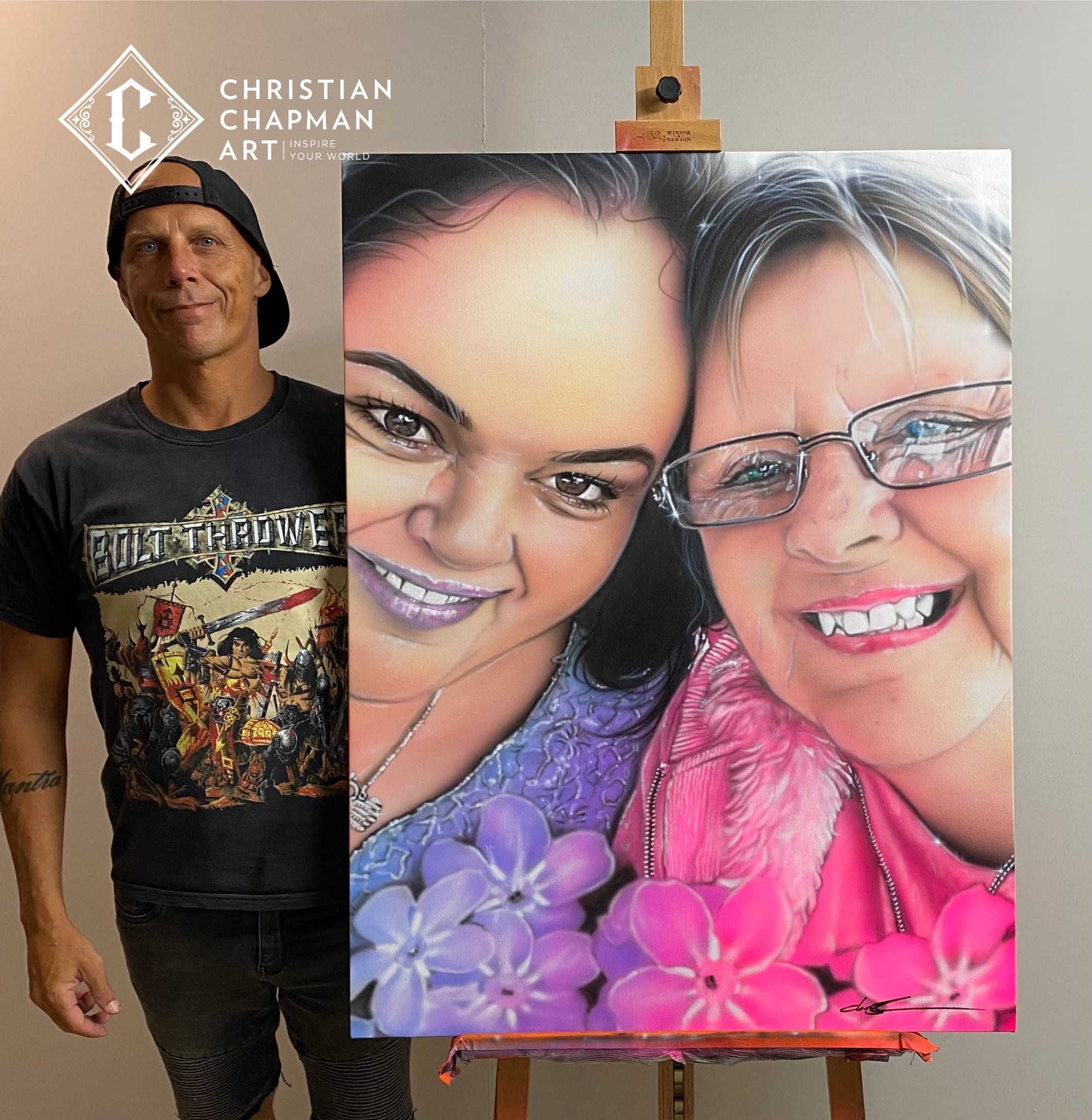
How to Turn a Photo Into Portrait Art
Enquire HERE for our breathtaking original portrait paintings.
Some photos deserve better than a phone gallery and a quick scroll past. A child’s expression, a beloved pet’s stare, a musician who shaped your life, a family moment you never want to lose - these are exactly the kinds of images people choose when they want to turn a photo into portrait art.
The difference matters. A photo records a moment. Great portrait art gives that moment weight, presence and permanence. It transforms something personal into something display-worthy - not just a memory kept, but a memory elevated.
What it really means to turn a photo into portrait art
Turning a snapshot into a finished artwork is not about copying every pixel. It is about translating the heart of the image into a piece with depth, emotion and visual impact. That is where true portraiture separates itself from generic photo effects and mass-produced print filters.
A strong portrait artwork captures likeness, of course, but likeness alone is not enough. The best pieces also hold expression, atmosphere and character. You should be able to recognise the subject instantly and feel something at the same time. That combination is what makes portrait art powerful in a home, a collection or a gift.
This is why the source photo matters, but it is not the only thing that matters. An artist can refine composition, strengthen contrast, simplify distractions and bring focus to the subject in ways a raw image often cannot. The goal is not merely to replicate the photograph. The goal is to create a piece that feels more striking than the original moment looked on screen.
Choosing the right photo for portrait art
If you want to turn a photo into portrait art successfully, start with an image that has emotional value and visual clarity. These two things work together. A technically decent photo with no emotional pull can feel flat as artwork. A deeply meaningful photo that is too dark, blurry or badly cropped may need more artistic interpretation to reach its potential.
The strongest reference photos usually have clear facial features, natural light and a strong focal point. Eyes matter enormously in portraiture. If the eyes are visible and expressive, the artwork has a better chance of feeling alive. Good lighting also helps reveal skin tone, fur texture, hair detail and the subtle planes of the face.
That said, perfection is not always required. Some of the most meaningful commissions come from older photos, memorial images or spontaneous snapshots that were never meant to become artwork. In those cases, the process becomes more interpretive. A skilled artist can often work around quality limitations, but there are trade-offs. Fine detail may need to be rebuilt rather than simply observed, and the final result may rely more heavily on artistic judgement.
Not every portrait style says the same thing
When people imagine portrait art, they often picture realism first. There is a good reason for that. Realistic portraiture has a unique ability to preserve identity with stunning accuracy while still feeling elevated and luxurious. For family portraits, pet portraits, celebrity works and memorial pieces, realism often carries the greatest emotional force because it honours the subject without distortion.
But style still matters. A tightly rendered portrait can feel dramatic and timeless. A looser painted approach can feel expressive and contemporary. A monochrome piece may look elegant and moody, while a colour-rich portrait can become a commanding focal point in a room.
The right choice depends on where the artwork will live and what you want it to say. If the piece is meant to anchor a living room or hallway, bolder presence may be ideal. If it is for a nursery, a quieter and softer treatment might suit better. If it celebrates a music icon or athlete, a more intense composition can give it that statement quality collectors often want.
Why artist interpretation changes everything
This is where many people underestimate the process. To turn a photo into portrait art at a high level, the artist does more than transfer an image onto canvas or paper. They make decisions constantly - what to emphasise, what to soften, what to remove and where to lead the viewer’s eye.
Background clutter is a common issue in everyday photos. Washing lines, random furniture, harsh shadows or awkward objects can pull attention away from the subject. In portrait art, these distractions can be reduced or removed entirely. The result feels cleaner, more intentional and more refined.
Composition also improves the final piece. A photo may be taken casually, but artwork does not have to stay locked into that same crop. An artist can strengthen balance, bring the face forward, adjust spacing and create a more powerful sense of presence. This matters especially for statement wall art, where the image needs to hold attention from across the room as well as up close.
Then there is emotion. A good artist recognises that the expression in the reference image is not just a visual detail. It is the entire reason the piece exists. Whether the subject is a child, a pet, a parent or a cultural icon, that emotional core has to remain intact. Without it, the work may be accurate but forgettable.
Digital filters versus real portrait art
There are countless apps and online tools that claim to turn a photo into portrait art in seconds. They can be fun, and for casual use they may be enough. But they rarely produce a piece with true depth, individuality or collector appeal.
Automated filters tend to flatten nuance. Skin becomes generic. Eyes lose life. Features can become over-smoothed or exaggerated in odd ways. Most importantly, they cannot make human judgements about what gives a subject presence. They apply a style. They do not create a portrait with intention.
That is the real distinction. If you want something disposable, fast tools exist. If you want an artwork that feels personal, substantial and worthy of display for years, human craftsmanship still wins. There is simply no substitute for an artist who understands form, realism and emotional impact.
Thinking about scale, placement and finish
A portrait should not be chosen in isolation from the space where it will hang. The same image can feel intimate at a smaller size or commanding at a larger one. If you are commissioning art for a feature wall, size becomes part of the statement. A powerful portrait with the right scale can transform an interior from pleasant to unforgettable.
This is also where finish matters. A premium artwork should feel considered from every angle - colour palette, framing approach, orientation and how the piece interacts with furniture, light and surrounding decor. A dramatic portrait of a musician or celebrity may suit a modern room with strong contrast. A family portrait may benefit from a warmer, more timeless presentation.
It depends on whether you want the artwork to blend beautifully or take control of the room. Neither choice is wrong. The strongest result comes from knowing which one you want before the piece is created.
When portrait art becomes more than decoration
The reason custom portraiture remains so compelling is simple. It is personal in a way mass-produced wall art can never be. It can mark a relationship, honour a loss, celebrate a passion or preserve a face that means everything to you.
That emotional dimension is what lifts portrait art above trend-based decor. A well-made piece does not become irrelevant when styles shift. It keeps its power because its subject matters. That is why realistic portraiture continues to resonate so strongly with families, collectors, pet lovers and fans of iconic figures alike.
For buyers looking for something premium, the value is not only in the finished object but in the feeling it carries. A portrait that truly captures someone can stop people in their tracks. It invites a second look. It starts conversations. It holds memory in a form you can live with every day.
For those seeking that level of impact, brands such as Christian Chapman Art speak directly to the desire for realism, reverence and visual presence. The appeal is not simply owning art. It is owning a piece that feels unmistakably yours.
The best place to start is with the photo you keep coming back to - the one that already means something before it becomes art. When the image is right and the artist is right, the result is not just a portrait. It is a lasting presence on your wall.