

12 Famous Realistic Portrait Artists
View our beautiful original portraits HERE.
Some portraits impress you for a second. Others stop you cold because the face on the canvas feels present - not just accurate, but alive. That is the standard set by famous realistic portrait artists, and it is exactly why realism continues to hold such power for collectors, families, and anyone who wants art with emotional weight.
A great realistic portrait does more than copy a photograph. It captures tension in the mouth, light in the eyes, the structure beneath the skin, and the atmosphere around a person that makes them recognizable at once. For buyers, that difference matters. When you commission a portrait for your home, a memorial piece, or a statement wall display, likeness is only the beginning. Presence is the real prize.
Why famous realistic portrait artists still matter
Portrait realism has never been just about technical skill, although skill is non-negotiable. The best artists in this space combine draftsmanship, observation, and restraint. They know when to render every eyelash and when to let a passage breathe. They understand that a face can be exact and still feel empty if the emotional core is missing.
That is why certain names keep rising above the rest. Some became legends through royal commissions or museum acclaim. Others gained global recognition because their work proved realism could still feel fresh, bold, and culturally relevant. Across eras, the common thread is the same: they make viewers feel they are in the company of a real person, not just looking at paint.
12 famous realistic portrait artists worth knowing
John Singer Sargent
Sargent remains one of the great benchmarks for portrait painters. His work is elegant, technically fearless, and astonishingly alive. He painted society figures with fluid confidence, but what still feels modern is his ability to combine polish with personality. His portraits rarely feel stiff. Even in highly formal settings, his subjects seem to breathe.
For collectors and portrait lovers, Sargent is a reminder that realism does not need to be rigid. Precision can still move with energy.
Diego Velazquez
Velazquez brought authority and humanity into the same frame. Known for his portraits of the Spanish court, he painted power without flattening the individual behind it. His surfaces can look economical from a distance, yet they resolve into astonishing realism up close.
He matters because he proved a realistic portrait could be psychologically sharp. Status is there, but so is vulnerability.
Hans Holbein the Younger
Holbein's portraits are controlled, exacting, and unforgettable. He is often associated with Tudor history, but the reason his work still lands is simple: the likeness feels absolute. Fabrics, jewelry, skin, and expression are handled with a level of clarity that makes each sitter feel singular.
His work shows one side of portrait realism at its most disciplined. If you love clean detail and unmistakable identity, Holbein set the standard early.
Rembrandt van Rijn
Rembrandt belongs on any serious list of famous realistic portrait artists because he understood the face as a record of experience. His realism was never cold. It was compassionate, searching, and deeply human.
His self-portraits in particular show how realism can hold age, fatigue, intelligence, pride, and fragility at the same time. That emotional complexity is why his portraits still feel intimate centuries later.
Ilya Repin
Repin's portraits carry tremendous force. He painted writers, composers, and public figures with realism that feels both masterful and unfiltered. There is strength in his brushwork, but also remarkable sensitivity.
What makes Repin stand out is his refusal to over-sanitize the sitter. His portraits feel honest. For modern buyers, that kind of realism can be more compelling than beauty alone.
Joaquin Sorolla
Sorolla is celebrated for light, and that is exactly why his portraits feel so immediate. He painted flesh with warmth and atmosphere rather than heavy finish. Even when his work appears effortless, the structure is incredibly controlled.
He is a useful example of how realism can stay radiant. A portrait can be true to life without losing freshness or visual luxury.
Antonio Lopez Garcia
Lopez Garcia occupies a different lane of realism - quieter, slower, and intensely observant. His portraits and figure works are known for their meditative stillness. He does not rush the image or flatter the sitter for easy effect.
That patience gives his work gravity. For viewers who value realism as an act of devotion to the subject, his approach is especially powerful.
Chuck Close
Close changed the conversation around portrait realism. His large-scale heads are immediately recognizable, yet his method often breaks the image into systems, marks, and color relationships that only resolve fully at a distance.
He is a reminder that realism is not one fixed style. A portrait can be highly realistic and still feel experimental. That trade-off matters. Some viewers want seamless naturalism, while others are drawn to visible process and bold scale.
Kehinde Wiley
Wiley's portraits are rich, commanding, and impossible to ignore. He places contemporary subjects in poses historically associated with European master portraiture, creating images that are both technically refined and culturally pointed.
His realism is central to the impact. The faces are convincing, the presence is undeniable, and the scale is often monumental. He shows how realistic portraiture can carry prestige, identity, and modern relevance all at once.
Gottfried Helnwein
Helnwein is known for hyperreal portraiture that can feel unsettling, vulnerable, or confrontational. His command of detail is extraordinary, but the real charge comes from mood. These are not portraits that sit politely on the wall.
That edge is worth noting because realism is not always comforting. Sometimes it is most powerful when it asks the viewer to stay with something intense.
Yigal Ozeri
Ozeri's large-scale portraits are often described as photographic in their finish, but the appeal goes beyond technical illusion. He creates cinematic presence. Skin, hair, light, and atmosphere are handled with meticulous care, producing works that feel lush and immersive.
For homeowners and collectors, his work speaks to one of realism's biggest strengths: dramatic display value. A portrait can become the center of a room when its scale and execution are strong enough.
Robin Eley
Eley is widely recognized for hyperreal paintings that often incorporate plastic wrap or other distortions over the figure. The technical control is undeniable, but what makes him memorable is the tension between realism and obstruction.
His work demonstrates that even highly lifelike portraiture benefits from a point of view. Technique gets attention. Interpretation makes it last.
What separates a good portrait from a great one
When people look at famous realistic portrait artists, they often focus first on detail. Detail matters, but it is not the full story. A portrait can be packed with information and still miss the person. Great portraiture balances anatomy, expression, composition, and emotional truth.
The eyes are part of it, but so is the shape of the jaw, the rhythm of the hairline, the way light rests on the cheek, and the choice of background or crop. Even a slight shift in tone can make a face feel softer, stronger, younger, or more distant. That is where artistic authority comes in.
It also depends on purpose. A family portrait needs warmth and recognition. A celebrity portrait might need drama and iconic presence. A memorial piece often calls for dignity and tenderness over excess stylization. The strongest artists understand these differences and adjust accordingly.
Why realism remains so powerful in the home
Realistic portraiture has a special place in interior spaces because it does two jobs at once. It carries emotional meaning, and it creates visual impact. That combination is rare. Abstract work can be beautiful, but a realistic portrait gives the room a human center.
For many collectors, that is the real draw. A portrait of a child, a beloved pet, a musician who shaped your life, or a family member you never want to forget does more than decorate a wall. It anchors memory in a form you can live with every day.
That is also why commissioned realism continues to thrive. People do not just want generic luxury. They want a piece that feels personal and unmistakable. When done well, realism delivers that with force.
Famous realistic portrait artists and the standard they set
Studying famous realistic portrait artists is not only about art history. It sharpens your eye for quality. You start to notice what makes one portrait memorable and another merely competent. You see the difference between a smooth finish and a genuine likeness, between surface accuracy and emotional charge.
That standard matters if you are choosing art for your home or thinking about a commission. The right portrait should feel like more than a picture. It should carry identity, reverence, and enough visual strength to hold its own in a room for years.
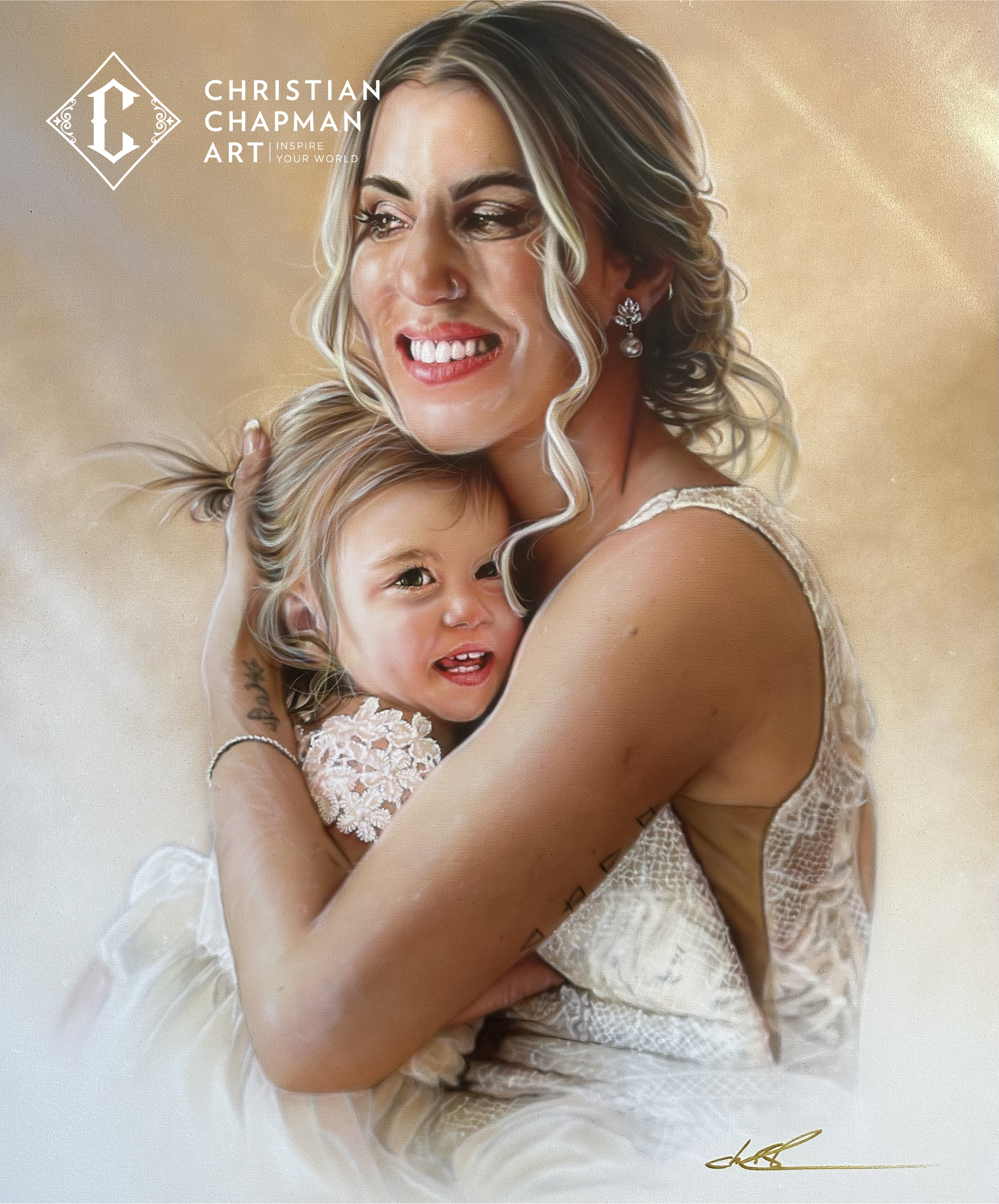
At Christian Chapman Art, that belief sits at the heart of realistic portraiture. The best work does not simply resemble the subject. It honors them.
If you are drawn to realism, trust that instinct. The faces that stay with us are the ones painted with both precision and feeling, and that combination never goes out of style.