

How to Choose Statement Wall Art That Matters
View our stunning original paintings HERE.
A blank wall is not asking to be filled. It is asking to be claimed. The right artwork can turn a quiet lounge room into a conversation, give a hallway a pulse, or make a bedroom feel unmistakably yours. Knowing how to choose statement wall art means looking beyond what merely matches the cushions and choosing a piece with presence, story and staying power.
Statement art should never feel like an afterthought. It is the visual anchor of a room: the piece your guests notice first, the image that catches your eye every time you walk past, and often the detail that makes a home feel collected rather than decorated.
Start with the feeling you want the room to hold
Before measuring a wall or browsing subjects, consider the emotional role the room plays. A statement piece has more impact when it supports that role rather than simply occupying a large empty space.
In a family room, a detailed portrait of your children, a beloved pet or a meaningful shared memory can create warmth and connection. In a music room, office or creative studio, an expressive portrait of an artist who shaped your life can bring energy and conviction. A coastal interior may call for an ocean piece that feels expansive and calming, while a moody black-and-white portrait can give a minimalist space depth without adding visual clutter.
The question is not only, “What looks good here?” Ask, “What do I want this room to say about the people who live in it?” The strongest choices celebrate identity, memory, passion or a subject you would never tire of seeing.
Choose a subject with genuine staying power
Large art has a way of becoming part of daily life. You will see it in the morning, when friends arrive, and during those ordinary moments at home when the room is otherwise still. That makes the subject more important than a passing trend.
For some buyers, the obvious choice is personal: a custom portrait of a child, partner, parent or pet. These works preserve more than likeness. They capture a particular expression, era or bond that cannot be reproduced by generic décor. A memorial portrait can be especially powerful when you want a loved one’s presence honoured with sensitivity and extraordinary detail.
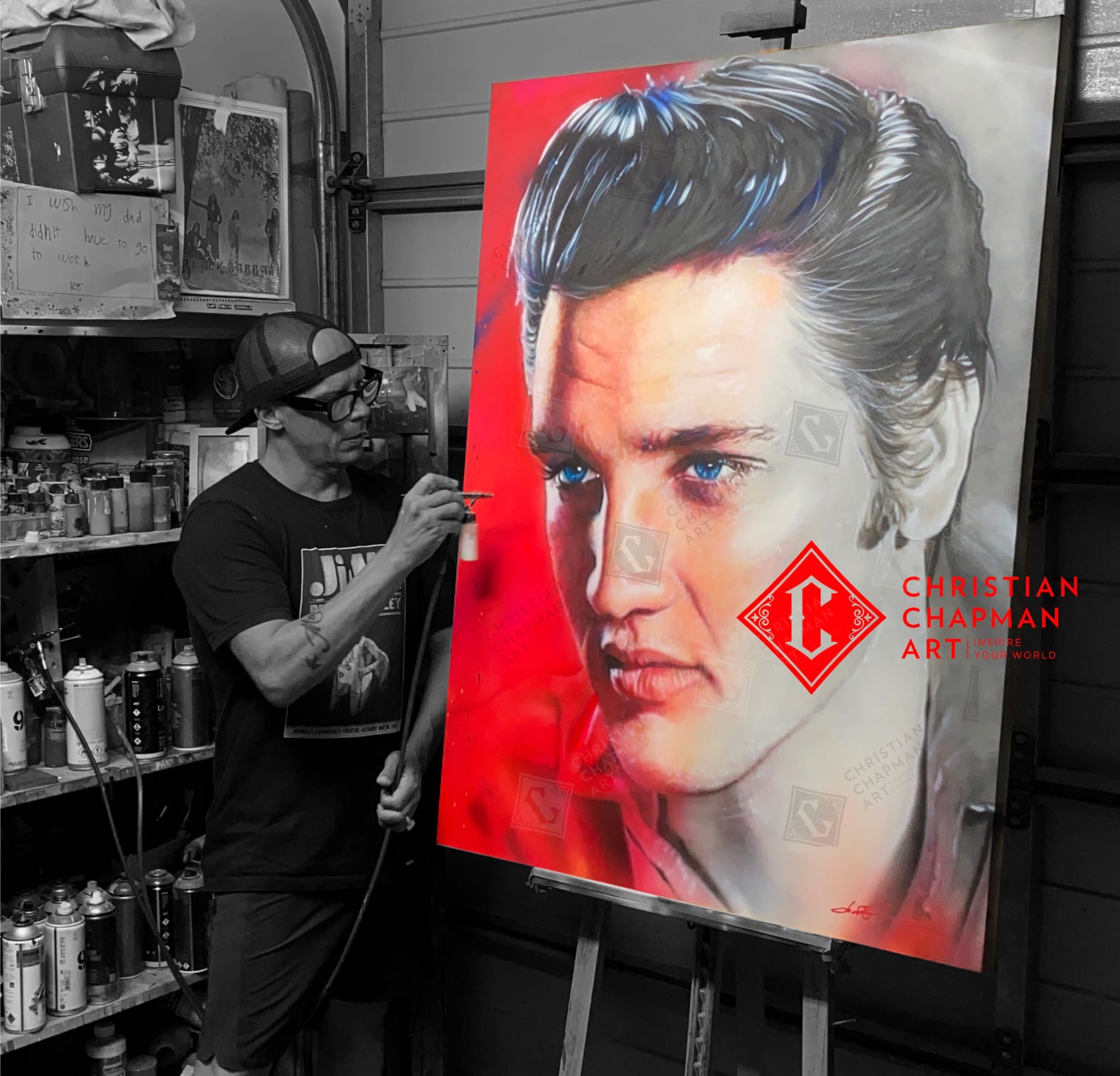
For others, statement art is a declaration of taste. A musician, athlete, cultural icon or tattoo-inspired subject can make an interior feel fiercely individual. The key is to choose someone or something that carries real personal meaning. There is nothing wrong with a bold celebrity portrait in a refined home. In fact, the contrast can be striking when the work is executed with realism, confidence and reverence for the subject.
A trend-led print may suit a short-term styling update. An original painting or commissioned portrait should be chosen more deliberately. It is an investment in a piece you can live with for years, perhaps even pass on.
Get the scale right before you fall in love
The most common statement-art mistake is buying a piece that is too small. A beautiful work can lose all authority when it sits alone in the middle of a large wall, surrounded by too much blank space.
As a useful guide, art above a sofa, bed or sideboard should usually span around two-thirds to three-quarters of the furniture’s width. Above a three-metre sofa, that often means a work around two metres wide, or a strong grouping arranged as one visual composition. Leave enough breathing room around the artwork so it feels intentional, but do not shrink it into insignificance.
For a standalone wall, start by marking out the intended dimensions with painter’s tape. Stand back. View it from the doorway, from the sofa and from the adjoining room. This simple test reveals whether you need one commanding portrait, a vertical work that draws the eye upward, or a wider landscape format that settles the room.
Height matters just as much. The centre of the artwork should generally sit around eye level, roughly 145 to 155 centimetres from the floor. When hanging art above furniture, leave a visual connection between the two. Around 15 to 25 centimetres above a sofa, console or bedhead is often effective, though high ceilings and oversized work can shift the balance.
Let colour support the art, not control it
You do not need to match every colour in a painting to the room. In fact, overly coordinated interiors can feel flat. Statement wall art often works best when it introduces a confident contrast: deep charcoal against warm neutral walls, electric blue in a quiet room, or rich skin tones and layered shadows against pale plaster.
Instead of colour-matching, look for a relationship. Pull one or two secondary tones from the artwork into smaller details such as a cushion, throw, vase or rug. This creates cohesion without making the room feel staged. If the art is highly detailed or saturated, give it a calmer surrounding palette so it remains the focal point.
Black-and-white portraiture is a particularly flexible option. It can suit contemporary, industrial, coastal and classic interiors, and lets texture, expression and composition do the talking. By contrast, a richly coloured original can become the palette-setting piece for an entire room. Neither approach is better. It depends on whether you want the artwork to command the space through drama or through restraint.
Consider realism, material and finish
A statement work needs enough visual substance to hold attention from across the room and reward a closer look. This is where craftsmanship matters. Fine details in the eyes, hair, skin, clothing and background can make a portrait feel alive rather than decorative.
Realistic art is especially compelling when the emotional connection to the subject is central. A faithful likeness is not a minor detail when the piece represents your child, your dog or an icon you admire. It is the difference between a generic image and a work that feels truly personal.
Think about finish as well. A framed piece can add structure and suit formal, traditional or polished interiors. An unframed canvas may feel more immediate and contemporary, especially at a larger scale. Consider the existing finishes in the room: timber, metal, stone, linen and leather all influence what will feel at home. The aim is not to make every element identical, but to create a considered tension between them.
How to choose statement wall art for the right wall
Not every empty wall deserves the biggest artwork. Give your strongest piece the position it has earned. The wall opposite an entry, above the main sofa, at the end of a long hallway or behind a dining table usually offers the best opportunity because the artwork is seen clearly and often.
Light deserves attention too. Natural daylight can reveal detail beautifully, but direct harsh sun may affect certain works over time. If your chosen wall receives strong afternoon light, consider window coverings, UV-protective glazing where appropriate, or a nearby wall with softer illumination. In the evening, a well-placed picture light or adjustable spotlight can transform art from background detail into a genuine focal point.
Also consider viewing distance. An intricate portrait benefits from enough room for both the full impact and the close inspection. In a narrow corridor, a vertical piece with a cleaner composition may work better than a huge, highly detailed canvas that cannot be appreciated from a step back.
Give commissioned art the space it deserves
Commissioning a piece changes the decision in the best possible way. Rather than trying to force a finished artwork into your interior, you can consider the wall, scale, subject and atmosphere from the beginning. Share reference images that reveal personality, not just appearance. The candid smile, favourite jacket, familiar guitar or distinctive markings on a pet are often the details that make a portrait feel unmistakably true.
Be clear about the desired mood. Do you want an intimate family heirloom, a dramatic tribute to a music legend, or a powerful piece that instantly changes the character of a room? At Christian Chapman Art, realism and emotional impact sit at the heart of that process, creating work designed to be remembered as much as admired.
Do not be afraid of a bold choice. The art that makes the greatest impression is rarely the safest option. Choose the portrait, ocean scene or iconic subject that gives you a real reaction, size it with confidence, and let it become the element that makes your home feel like no one else’s.