

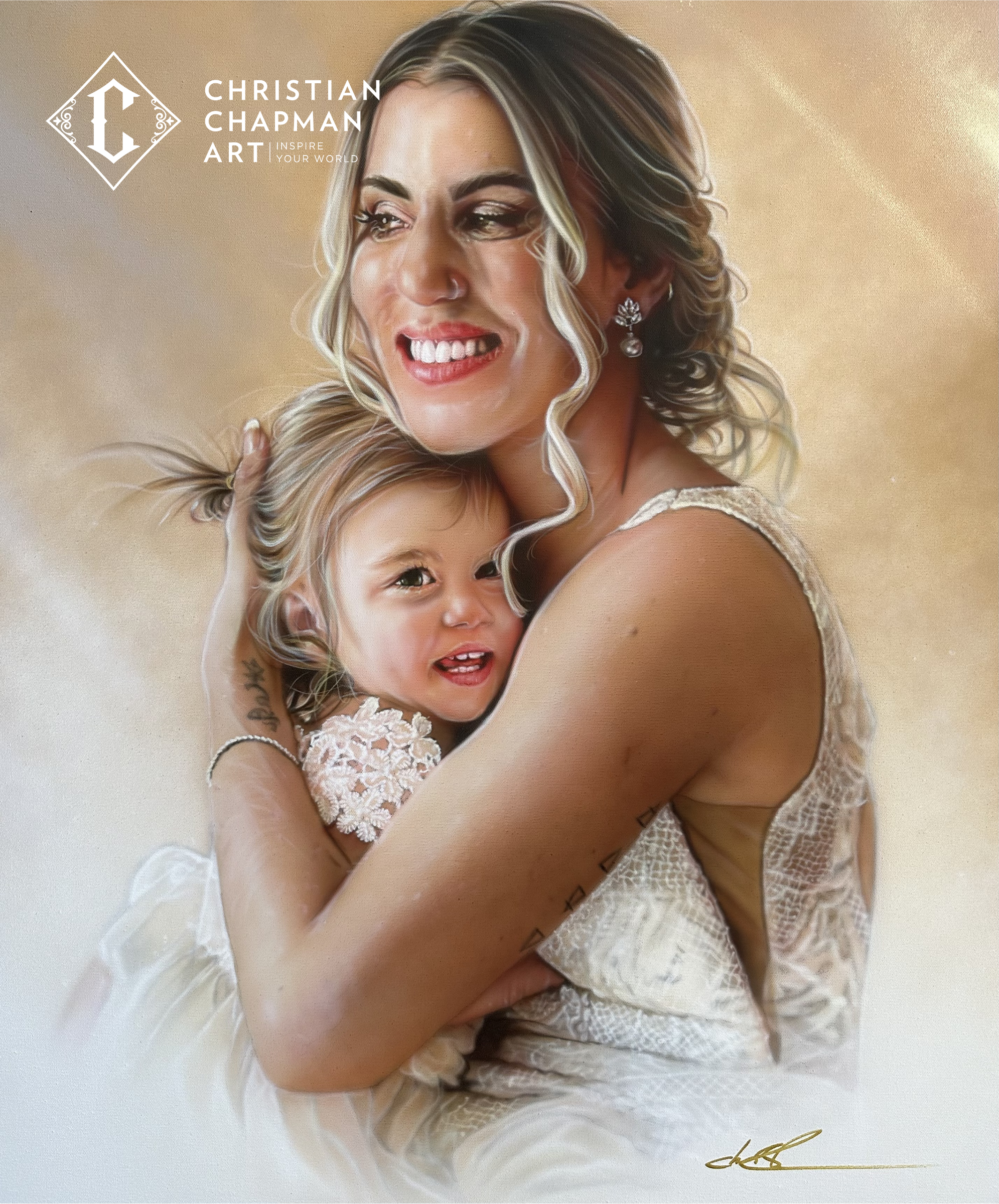
A Guide to Custom Portrait Commissions
View our beautiful portraits HERE.
A great portrait commission starts well before the first brushstroke. It begins with a feeling - the need to honour someone you love, celebrate a bond, remember a moment, or turn a personal obsession into a striking piece of wall art that actually means something. That is why a guide to custom portrait commissions matters. When the process is clear, the result is not just accurate. It is emotionally powerful, display-worthy, and deeply personal.
Custom portraiture sits in a different category from ordinary decor. A mass-produced print can fill a wall, but it cannot preserve the expression of your child at a certain age, the unmistakable gaze of a beloved dog, or the charisma of a musician who shaped your life. Commissioned art has weight because it is built around your subject, your story and your space.
The first decision is not usually size or medium. It is the subject itself. Some commissions are straightforward - a family portrait, a child, a pet, a wedding image. Others carry a different kind of intensity, such as a memorial piece, a celebrity portrait for a collector, or a tattoo-inspired artwork designed to feel bold and iconic. The best subject is the one that keeps pulling at you. If you already know exactly who or what belongs on your wall, that instinct is usually worth trusting.
Once the subject is clear, the quality of your reference imagery becomes everything. Realistic portraiture lives or dies on visual information. If you want stunning likeness, you need photographs that show detail, expression and lighting clearly. Blurry screenshots, harsh shadows and distant faces make the artist's job harder and the final outcome less precise. Crisp images with natural light tend to work best, especially when the eyes are visible and the facial features are not distorted by filters or extreme angles.
That does not mean every commission requires one perfect photo. In many cases, a portrait can be built from several references. You might have one image with the right smile, another with better lighting, and a third that captures the coat markings of a pet properly. This flexibility is often what makes custom work so valuable. It allows the final artwork to be guided by the best elements rather than trapped by the limitations of a single snapshot.
A strong guide to custom portrait commissions should also address style, because this is where many buyers hesitate. Realism is not simply about making someone look recognisable. It is about preserving presence. The right portrait should capture structure, mood and individuality, not just copy a photograph. That is especially important if the work is intended as a gift or statement piece, where emotional impact matters as much as technical skill.
Style choices still matter within realism. You may want a close-up portrait with dramatic contrast, a softer family piece with warmth and intimacy, or a high-impact artwork that feels more like a centrepiece than a keepsake. Background treatment can shift the entire mood. A clean, minimal backdrop puts all the focus on the subject. A darker atmosphere can add drama. A more stylised setting can make the portrait feel cinematic or decorative, depending on the room it is designed for.
This is where placement in the home should be part of the conversation. A commission is not created in a vacuum. It will live somewhere. A portrait destined for a hallway, living room or music room may need stronger visual presence than one intended for a private study or bedroom. Scale changes the emotional experience. Smaller works feel intimate. Larger pieces command attention and become part of the identity of a space.
If you are unsure about size, think less about measurements and more about role. Is this artwork meant to be a quiet personal treasure, or the first thing people notice when they walk into the room? There is no universal right answer. Bigger can feel more luxurious and immersive, but it also demands wall space and budget. Smaller can be elegant and focused, particularly for a single face or pet portrait. The best choice balances visual ambition with how you actually live.
Budget deserves an honest look too. Custom portrait commissions vary widely in price because they vary widely in complexity. Subject count, size, level of detail, medium and turnaround time all affect cost. A single-subject portrait with a minimal background is not the same undertaking as a multi-person family composition or a highly detailed celebrity piece designed at statement scale.
For buyers, the key is to think in terms of value rather than just price. Commissioned art is a one-off piece created around your memories, tastes and display goals. You are paying for skill, time, likeness, design judgement and the emotional significance of owning something no-one else has. Premium portraiture should feel like an investment in meaning as much as aesthetics.
Timing is another factor people often underestimate. If you are commissioning art as a birthday, anniversary or Christmas gift, planning early makes a real difference. Quality artwork takes time, and rushed commissions can limit options. Artists need time to assess references, confirm direction, create the work and prepare it properly. If your deadline is fixed, it is always smarter to enquire well ahead rather than hope a complex portrait can be squeezed in at the last minute.
Communication can make or break the commission experience. The strongest outcomes usually happen when the client is clear about what matters most. That might be a certain expression, a particular crop, the inclusion of meaningful details, or the wish for the portrait to feel elegant rather than sentimental. You do not need to speak in artistic jargon. You just need to be specific about the emotional result you want.
That said, a good commission is collaborative, not controlling. There is a difference between sharing useful direction and over-managing every inch of the image. Part of hiring a skilled portrait artist is trusting their eye for composition, contrast and what will translate beautifully as finished art. If realism and impact are the goal, professional judgement matters.
This is especially true when commissioning from an artist with an established style and a proven strength in likeness. If you are drawn to work because it has intensity, polish and unmistakable presence, that signature should not be diluted. The right artist will shape your subject into a finished artwork that feels elevated, not merely copied.
For many buyers, the emotional side of commissioning is the real reason they proceed. Family portraits preserve a fleeting age. Pet portraits hold onto character after years have passed. Music and celebrity commissions transform admiration into something tangible and personal. Memorial works can become a quiet anchor in the home, offering remembrance without needing explanation.
This emotional pull is exactly why custom art often outlasts trend-based interiors. Personal portraiture does not date in the same way generic wall decor does, because its value is tied to memory, identity and connection. It belongs to you in a way off-the-shelf art never can.
If you are considering your first commission, it helps to choose an artist whose work already makes you feel something. Technical skill matters, but so does emotional charge. Look for consistency in likeness, confidence in finish, and a portfolio that shows range across subjects - children, pets, musicians, collectors' pieces and statement interiors all ask for slightly different instincts. An artist like Christian Chapman Art stands out because the work aims for both stunning realism and the kind of visual force that changes a room.
The best custom portraits do more than resemble their subject. They honour them. They give memory a physical form. They turn admiration, grief, pride, love or nostalgia into something you can live with every day. If you approach the process with strong references, clear intent and the right artist, the result is not simply another artwork purchase. It is a piece with presence, permanence and personal gravity.
Choose the portrait that keeps calling to you, and let it become part of the story your home tells.