

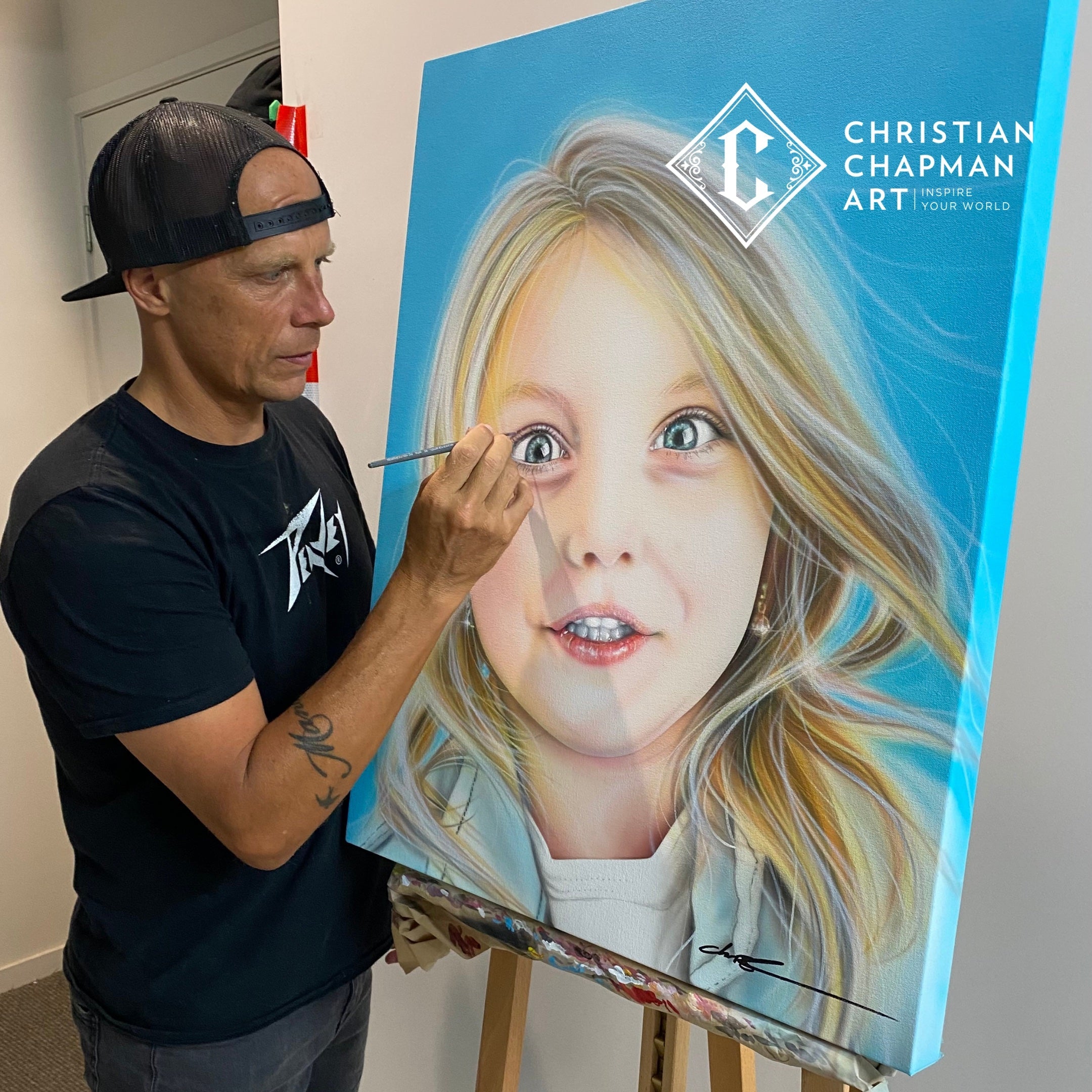
Choosing a Realistic Child Portrait Commission
You can view our beautiful children's portraits HERE.
A child’s expression changes in a flash. One second it is mischief, the next it is wonder, calm, shyness or fierce confidence. That is exactly why a realistic child portrait commission holds so much power. When it is done well, it does far more than record a face. It preserves presence, personality and that very specific feeling a parent never wants to forget.
Mass-produced wall décor can fill a space, but it cannot carry family history. A commissioned portrait can. It becomes part of the home in a deeper way - not just something attractive on the wall, but a statement piece tied to memory, identity and love. For many families, that is the difference between decoration and art worth keeping for decades.
Why a realistic child portrait commission matters
Children grow quickly, and photographs often pile up faster than anyone can properly enjoy them. Thousands of images can sit on a mobile, half-forgotten, while the moments they captured become increasingly distant. A painted portrait slows that process down. It asks you to choose one moment, one gaze, one mood, and give it the attention it deserves.
Realism matters here because likeness matters. Parents and grandparents do not want a vague impression of a child they adore. They want the tilt of the head they recognise instantly, the brightness in the eyes, the softness in the cheeks, the little details that make the child unmistakably theirs. A strong realistic portrait respects those details while still feeling elevated, polished and emotionally charged.
That balance is what gives the work its impact. Too clinical, and it can feel cold. Too stylised, and it may lose the child’s true character. The best portraiture finds the line between accuracy and feeling, producing a piece that is visually striking without losing intimacy.
What separates an average portrait from an unforgettable one
Not every commission achieves the same result, even when the subject matter is equally meaningful. The difference usually comes down to observation, technical skill and artistic judgement.
A great portrait artist does not simply copy a reference image. They interpret it with discipline. Skin tone has to feel natural. Features must be proportionally right. Light needs to sculpt the face rather than flatten it. The expression has to look alive, not staged or vacant. In child portraiture especially, softness and energy must coexist.
There is also the question of presence. Some portraits are accurate but forgettable. Others command the room. That often comes from choices around composition, scale, background, cropping and contrast. A child’s portrait can be tender and still feel powerful enough to anchor a space.
This is where premium portraiture earns its place. It is not only about whether the portrait looks like the child. It is about whether it feels worthy of the subject.
How to choose the right reference for a realistic child portrait commission
The reference image matters more than many buyers expect. Even the most skilled artist is working from the material provided, so the quality of that starting point shapes the final piece.
The strongest photos usually have clear natural lighting, sharp facial detail and an expression that feels genuine rather than forced. A rushed school photo or a dim indoor snapshot can still hold emotional value, but it may not always produce the same level of clarity or depth in the finished artwork. If you are choosing between several images, look for one where the eyes are visible, the features are not distorted by filters or wide-angle lenses, and the child looks like themselves on a very good day.
It also helps to think about the mood you want the portrait to carry. Do you want something soft and angelic, lively and playful, or poised and timeless? There is no single correct answer. It depends on the child, the room, and the reason for the commission.
If the portrait is intended as a gift, sentiment often leads the decision. If it is designed as a major feature in the home, visual strength matters just as much. Ideally, the reference should satisfy both.
Should you choose a candid or posed photo?
This depends on what you value most. A candid image can capture real personality and emotional truth in a way that feels effortless. A posed image may offer better lighting, cleaner detail and stronger composition. The best option is often a natural-looking photo with enough structure to support a refined artwork.
For younger children, overly posed images can sometimes feel stiff. For older children, a more composed portrait can look elegant and timeless. There is no rigid rule, only the question of what feels most authentic to that child.
Size, setting and display all matter
A portrait does not exist in isolation. It will live in a room, among furniture, colour palettes and other personal objects. That is worth considering before the commission begins.
Smaller works can feel intimate and personal, ideal for bedrooms, studies or more private spaces. Larger works create drama. They pull focus, define a wall and turn the portrait into a centrepiece. If your goal is to make a meaningful statement in a living area, hallway or entry space, scale should not be an afterthought.
Background choice matters too. A minimal or dark background can heighten realism and keep attention on the face. A softer setting may add warmth and atmosphere. Neither is inherently better. It depends on whether you want the portrait to feel contemporary, classic, dramatic or gentle.
For buyers who care about interiors, this is where art becomes transformative. A well-placed portrait does more than personalise a room. It changes the emotional temperature of the space.
The emotional weight behind the commission
Some child portraits are commissioned to celebrate a milestone. Others are gifts for birthdays, anniversaries or grandparents. Some are memorial pieces, carrying a depth of feeling that words cannot easily hold. In every case, the artwork becomes a vessel for memory.
That emotional weight is why the process should feel thoughtful rather than transactional. You are not buying a generic product. You are choosing to honour someone deeply loved in a form that will outlast trends, devices and disposable prints.
For many clients, the portrait gains meaning over time. A piece commissioned when a child is small can become one of the most valued objects in the home years later. Its value grows because the moment it captured can never be repeated.
What to expect from the commission process
A high-quality commission should feel clear and considered from the beginning. You should know what image is being used, what size and format are available, how the artwork will be presented and what kind of finish to expect. Confidence in the process matters because trust matters.
It is also worth understanding that realism takes time. Precision cannot be rushed without compromising quality. If you want something exceptional, patience is part of the investment. That is especially true if the piece is intended for a significant date or gifting season.
Communication also matters. A serious portrait artist will care about both likeness and impact. That means considering not only whether the child is recognisable, but whether the piece carries the right atmosphere. Christian Chapman Art is built around that exact principle - true likeness with emotional force, created to feel as powerful in the home as it is personal to the family.
A realistic child portrait commission is not just for now
There is a temptation to think of portraiture as sentimental first and decorative second. In reality, the strongest commissioned pieces do both. They preserve someone precious while adding sophistication, warmth and individuality to a home.
That makes them especially valuable in an era of throwaway imagery. When everything is photographed constantly, permanence becomes more meaningful. A hand-crafted artwork stands apart because it asks for attention and rewards it. It is lasting by design.
Years from now, the portrait will not matter because it was fashionable. It will matter because it was faithful. Faithful to a face, a feeling and a chapter of family life that deserved to be seen properly.
If you are considering a realistic child portrait commission, choose the piece that gives you that instant recognition in your chest - the one that feels like them, completely and unmistakably. That is usually the portrait you will never tire of seeing.