

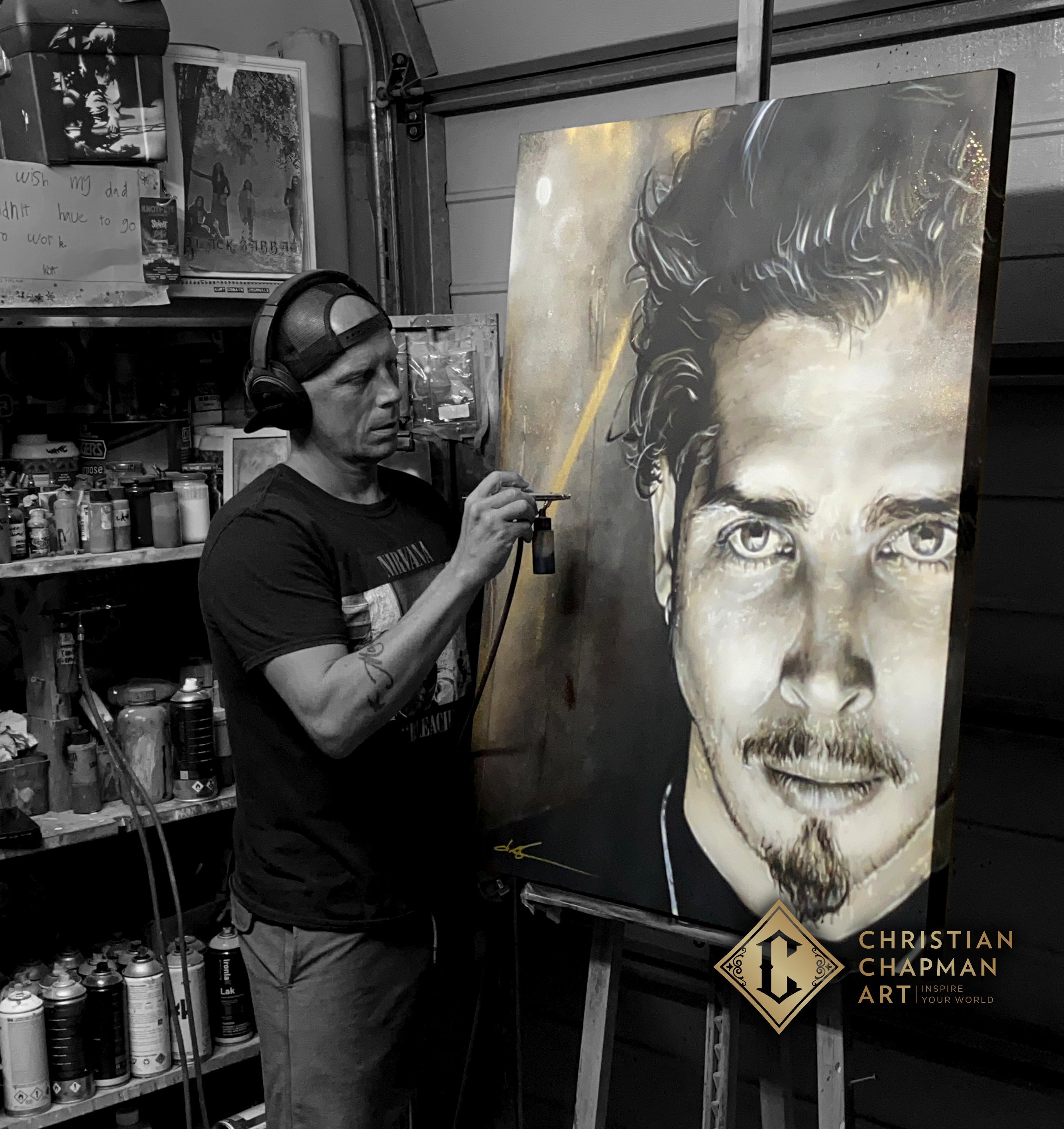
Why Musician Portrait Art Feels So Personal
View our stunning musician original paintings HERE.
A great song can pin you to a moment faster than a photograph. One chord, one lyric, one unmistakable face under stage lights, and suddenly you are back in the car, at the concert, in your first apartment, or standing in a room that changed your life. That is why musician portrait art carries a different kind of weight. It is not only about admiring a famous face. It is about giving shape to the soundtrack of your identity.
For serious music lovers, collectors, and anyone who wants their walls to say something real, this kind of portraiture does more than decorate a space. It captures devotion, memory, and presence. When it is done with skill, realism, and conviction, the piece becomes more than fan art. It becomes a statement.
What makes musician portrait art different
Portrait art always asks the same question: who is this person, really? With musicians, the answer is more layered. A singer or guitarist is not only recognized by facial features. They are recognized by attitude, movement, styling, emotion, and the energy they bring to a stage or a recording. If a portrait misses that, it may still resemble the subject, but it will not feel alive.
That is the difference between a generic image and a compelling work of art. Strong musician portrait art captures likeness, but it also captures identity. The tilt of the head, the tension in the hands, the stare into the crowd, the softness between songs, the glamour, the grit, the mystery - these details tell the truth of the subject.
This matters even more when the musician means something deeply personal to the buyer. For many people, a portrait of a favourite artist is tied to grief, nostalgia, rebellion, romance, or self-discovery. The art needs to respect that emotional charge. A flat or stylized piece can work beautifully in some spaces, but when the goal is impact, realism often carries the strongest punch because it makes the connection immediate.
Musician portrait art as memory and identity
People do not usually buy portraits of musicians for neutral reasons. They buy them because the subject marks a chapter in their life. It might be the artist who got them through a loss, the band they followed for years, the performer whose records filled their childhood home, or the icon whose image shaped their personal style.
That emotional history is what gives the artwork its staying power. Trends fade. Cheap prints come and go. But a portrait that reflects a meaningful connection keeps its place because it still says something true about the person who chose it.
In a home, that creates a very different effect than mass-produced wall decor. Instead of filling blank space, the piece brings personality into the room. It tells visitors something about your taste, your memories, and the artists who matter to you. It can feel intimate, even when the subject is world-famous.
This is also why musician portraiture works so well as a gift. When chosen carefully, it shows a level of attention that generic presents rarely match. It says, I know what moves you. I know which voice, which era, which face belongs to your story.
Why realism matters in a musician portrait
With iconic subjects, audiences know immediately when something is off. They know the exact set of the mouth, the intensity of the eyes, the bone structure, the hairstyle, even the way charisma sits on the face. A convincing portrait requires technical control, but technique alone is not enough. The artist also needs restraint.
Too much polishing can erase character. Too much stylization can weaken recognition. Too much detail in the wrong places can make the piece feel stiff instead of powerful. The strongest realistic portraits choose carefully where to push drama and where to stay faithful.
This is where premium portraiture separates itself. True likeness is not copied detail. It is intelligent observation. It is knowing which expression captures the subject at their most recognizable and which visual elements carry emotional force. For a musician, that may be a microphone held close, a leather jacket catching light, a quiet profile view, or the unmistakable gaze that fans know instantly.
When realism is handled well, the result feels immediate from across the room and rewarding up close. That combination is what gives the artwork presence on a wall.
Choosing the right musician portrait for your space
Not every portrait needs to shout. Some should. Others should hold a room with quiet authority. The right direction depends on the space, the subject, and the role you want the piece to play.
A large-format portrait of an iconic performer can become the anchor of a living room, studio, media room, or hallway. It creates drama fast, especially when the subject already has a strong visual identity. Think of artists known for stage presence, signature fashion, or unforgettable expressions. These portraits thrive when given room to breathe.
Smaller or more intimate works can be just as striking in personal spaces. A bedroom, music corner, office, or listening room often benefits from a portrait with emotional closeness rather than spectacle. A subdued palette, a thoughtful crop, or a reflective expression can make the piece feel deeply personal without overwhelming the room.
Colour also changes the mood. High-contrast black and white often gives musician portrait art a timeless edge. It can feel cinematic, elegant, and serious. Rich color can push the piece toward performance, personality, and visual heat. Neither is automatically better. It depends on whether you want the room to feel classic, intense, moody, or bold.
Commissioned musician portraits versus ready-made pieces
There is a place for both original available works and custom commissions. The best choice depends on what matters most to you.
A ready-made piece works beautifully when you connect immediately with an existing portrait. You have already seen the composition, the mood, and the finish. There is no guesswork about whether the piece fits your taste because the visual proof is right in front of you.
A commission offers something more personal. You may want a specific artist, era, outfit, pose, or emotional tone that you cannot find elsewhere. You may want the portrait designed for a particular wall, room palette, or collection. In that case, customization gives you a piece with stronger personal meaning and a more tailored visual result.
The trade-off is simple. Existing work gives certainty and speed. A commission gives precision and individuality. Neither is lesser. It depends on whether you are responding to a finished image or building one around your own vision.
For buyers who care about both display value and emotional accuracy, commissioning can be especially rewarding. It allows the portrait to reflect not just the musician, but your relationship to that musician.
When a musician portrait becomes a statement piece
A true statement piece does two jobs at once. It commands attention, and it rewards attention. People notice it immediately, then continue noticing more.
That is where musician portraits have unusual strength. The subject often arrives with cultural gravity already attached. Add realistic execution, scale, and emotional depth, and the artwork can shift the entire atmosphere of a room. It gives the space edge, story, and confidence.
This is one reason collectors and homeowners return to portraiture when they want something unforgettable. Abstract art can create mood. Decorative prints can add colour. But a remarkable portrait can create presence. It feels inhabited. It gives the room a focal point with character.
For interiors, that can be transformative. A carefully chosen portrait can tie together music, memory, style, and architecture in a way that feels curated rather than accidental. It works especially well in homes where the owner wants art to say something specific instead of simply matching the couch.
Christian Chapman Art has built a strong reputation around this kind of impact, particularly in realistic musician and celebrity portraiture where likeness and emotional force need to land at the same time.
The value of art that means something
There is always a cheaper option. There is always a quick print, a poster, or a mass-produced image that can fill the same patch of wall. But that is not the same as living with a piece that holds significance.
When you choose musician portrait art with care, you are choosing more than a subject you admire. You are choosing craftsmanship, mood, memory, and a piece of your own identity made visible. That is why the best portraits stay with people. They do not just represent music. They represent what music did to your life.
If a face, a voice, or a certain era still follows you years later, it may deserve more than a playlist slot or a passing mention. It may deserve a place on the wall where it can keep speaking without making a sound.