

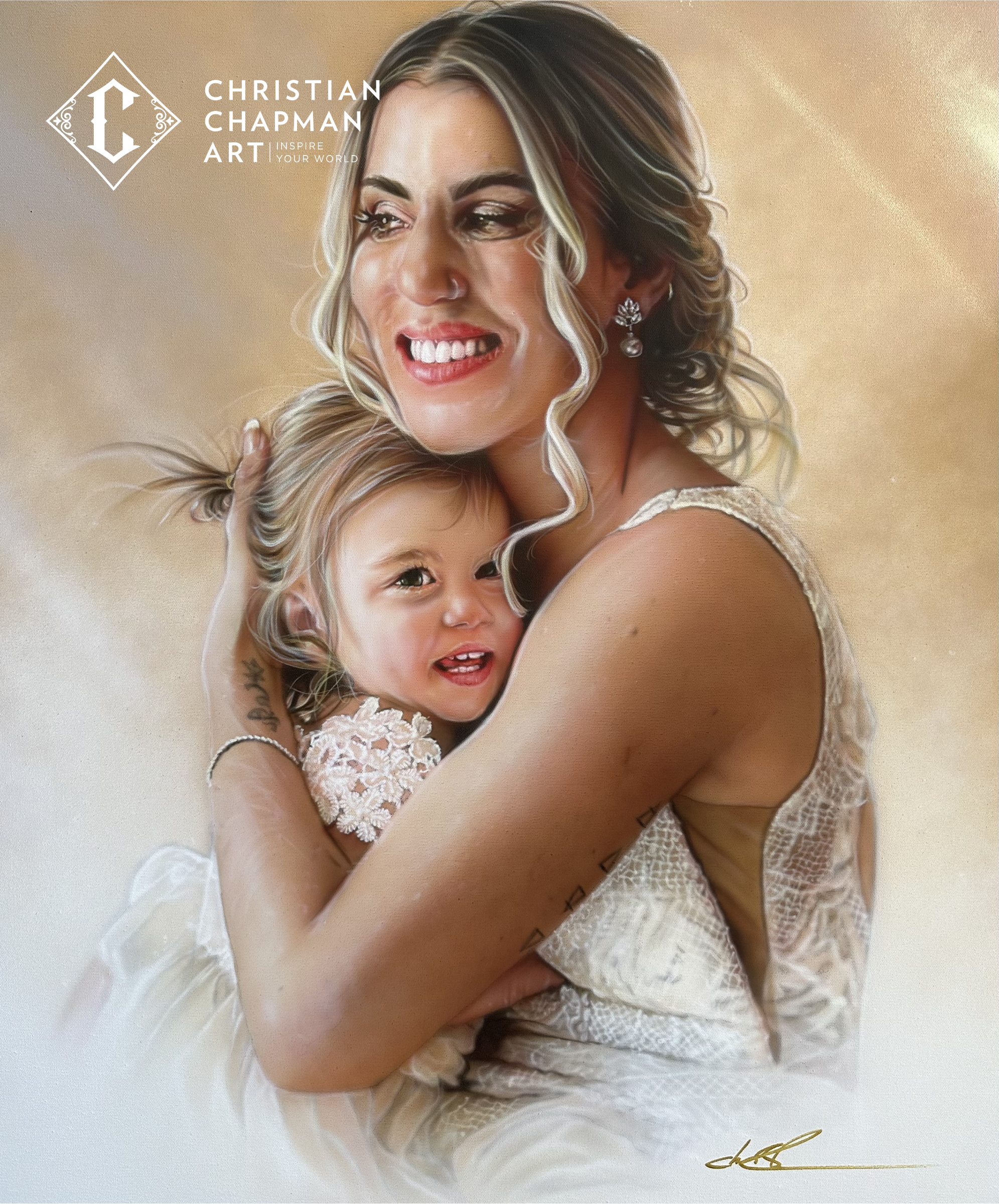
What a Hyper Realistic Portrait Artist Does
View our beautiful original portraits HERE.
A great portrait can stop you mid-step. Not because it looks polished, but because it feels alive. That is the difference a hyper realistic portrait artist brings to the wall - not just technical accuracy, but the rare ability to make a face, expression, or presence feel immediate years after the moment has passed.
For buyers, that distinction matters more than most people expect. Anyone can print a photo on canvas. Very few artists can translate a real person, pet, or cultural icon into a hand-created work that holds attention across the room and still rewards a close look. Hyper realism sits in that demanding space where craftsmanship, patience, and emotional sensitivity all have to work together.
What makes a hyper realistic portrait artist different
A hyper realistic portrait artist is not simply copying a photograph. The goal is to create a portrait with extraordinary precision while preserving the feeling of the subject. Skin texture, reflected light, hair direction, eye moisture, fabric detail, tattoos, jewelry, and subtle shifts in expression all matter, but none of them matter more than likeness itself.
That is where the discipline becomes serious. A technically impressive portrait can still fail if the face is slightly off, if the eyes feel vacant, or if the overall energy of the subject disappears in the process. Realism without emotional truth feels cold. Emotional intent without precision feels unfinished. The best work delivers both.
This is also why hyper-realistic portraiture carries such impact in a home. It does more than decorate a room. It anchors memory, identity, and admiration in a visual form that feels substantial. Whether the subject is a child, a beloved dog, a music legend, or a family member being honored, the result should have presence, not just resemblance.
Why people commission hyper realistic portrait art
Most buyers are not looking for art in the abstract. They are looking for someone. A parent wants the softness and spark in their child’s face captured before time moves on. A pet owner wants more than a cute image - they want the intelligence, loyalty, or mischief that made that animal unforgettable. A music fan wants a portrait that does justice to the icon who shaped a part of their life.
That emotional reason is often what separates a meaningful commission from a generic purchase. Mass-produced wall decor fills space. A custom portrait carries history. It can mark a milestone, honor a loss, celebrate obsession, or turn a deeply personal memory into a centerpiece.
There is also a design reason people choose this style. Hyper-realistic portrait art has weight in an interior. It commands attention in entryways, living rooms, staircases, offices, and music rooms because it reads as intentional. It tells guests that this piece was chosen for a reason.
The process behind a portrait that feels alive
From the outside, hyper realism can look almost mysterious. In reality, it is built on disciplined observation and countless informed decisions. The artist studies proportion, tonal range, structure, edges, and color temperature with extreme care. Tiny shifts matter. If a highlight is too hard, skin can look plastic. If shadows are too soft, the face can lose structure. If details are pushed everywhere equally, the portrait can become stiff.
Reference images play a major role, but they are only the starting point. A strong artist knows when to follow the reference and when to interpret it. Cameras flatten some features, exaggerate others, and often lose emotional nuance. A portrait artist may refine contrast, adjust composition, clarify form, or unify distracting elements so the final work has more power than the original photo.
This is where experience shows. Hyper realism is not about rendering every pore with equal force. It is about knowing where detail should intensify and where it should relax. The human eye naturally goes to the face, especially the eyes and mouth, so those zones often carry the most authority. Backgrounds, clothing, and secondary elements support the subject rather than competing with it.
Choosing the right subject for a hyper realistic portrait artist
Some subjects suit this style especially well. Family portraits are an obvious fit because likeness is non-negotiable. People know every feature of the person they love, so even a small inaccuracy stands out. Hyper realism answers that demand for fidelity.
Pets are another powerful category. Fur texture, wet noses, alert eyes, and breed-specific details all come alive beautifully in this style. The emotional stakes can be especially high with memorial pieces, where the artwork is not just decorative but deeply personal.
Then there are musicians, actors, athletes, and cultural figures. These portraits often work best when they go beyond fandom and capture charisma. Viewers already know the public image of an icon. What makes a portrait compelling is the sense of attitude, intensity, elegance, or defiance that made that person memorable in the first place.
Even so, not every photo becomes a strong portrait automatically. Image quality matters. Lighting matters. Expression matters. A technically weak source image can still produce a good result in expert hands, but there are limits. If you want a statement piece, the starting material should have enough clarity and character to support that ambition.
What to look for before you hire a hyper realistic portrait artist
The first thing to judge is not detail for detail’s sake. It is likeness. Look across an artist’s portfolio and ask a simple question: do these people feel convincingly themselves? If every portrait is polished but somehow generic, that is a warning sign.
Next, look for consistency. One excellent piece can happen. A body of excellent work is something else. You want to see reliable quality across different subjects, ages, skin tones, lighting situations, and themes. An artist who can move from a child portrait to a pet commission to a musician piece without losing strength is showing real command.
It also helps to study emotional range. Some artists are very good at rendering surfaces but less convincing at capturing warmth, depth, or personality. Others understand how to make a portrait feel intimate, dramatic, or reverent depending on the subject. That sensitivity is what turns technical skill into lasting art.
Practical factors matter too. Commissioning custom artwork should feel clear and professional. Buyers should understand sizing, timelines, pricing, the reference photo process, and what level of customization is possible. Premium art deserves a polished experience from first inquiry to final delivery.
Hyper realism, value, and why price varies
Portrait pricing can vary widely, and for good reason. Size is an obvious factor, but it is not the only one. Complexity, number of subjects, level of background detail, medium, and turnaround time all affect the final cost.
There is also the matter of artistic level. A highly skilled portrait artist is charging for more than labor hours. You are paying for judgment, consistency, and the ability to get the face right. That last part sounds simple until you have seen expensive artwork that missed the likeness entirely.
For many buyers, a premium commission is easier to justify when they stop comparing it to generic decor and start comparing it to what it actually is - a one-of-a-kind work built around someone they care about. If the piece becomes a focal point in the home and still means something years later, value looks different.
That is one reason collectors and first-time buyers alike are drawn to artists who can deliver both realism and emotional force. Brands like Christian Chapman Art stand out in that space because the work is created to be visually commanding while still feeling personal, whether the subject is family, a pet, or a larger-than-life cultural figure.
When hyper-realistic portraiture works best in a home
This style is not timid, and that is part of its appeal. In the right setting, it can transform a room. A large-scale portrait in a living area creates a focal point with genuine drama. A child or family piece in a hallway adds warmth and continuity. A musician portrait in a studio, media room, or office brings character with edge.
The key is intention. Hyper-realistic work tends to perform best when it is given space to breathe. If the room is already visually busy, the portrait can lose impact. If the placement, scale, and surrounding decor are chosen carefully, the artwork feels integrated rather than crowded.
This is where some buyers hesitate, especially if they love the idea of portrait art but worry it may feel too formal or too intense. It depends on the piece. A softer family portrait creates a different mood than a high-contrast celebrity work. The right artist can help shape the tone so the final piece suits both the subject and the room.
A portrait should feel like more than an image you own. It should feel like presence made visible. When that happens, the artwork does not just match the space - it changes the way the space is experienced.