

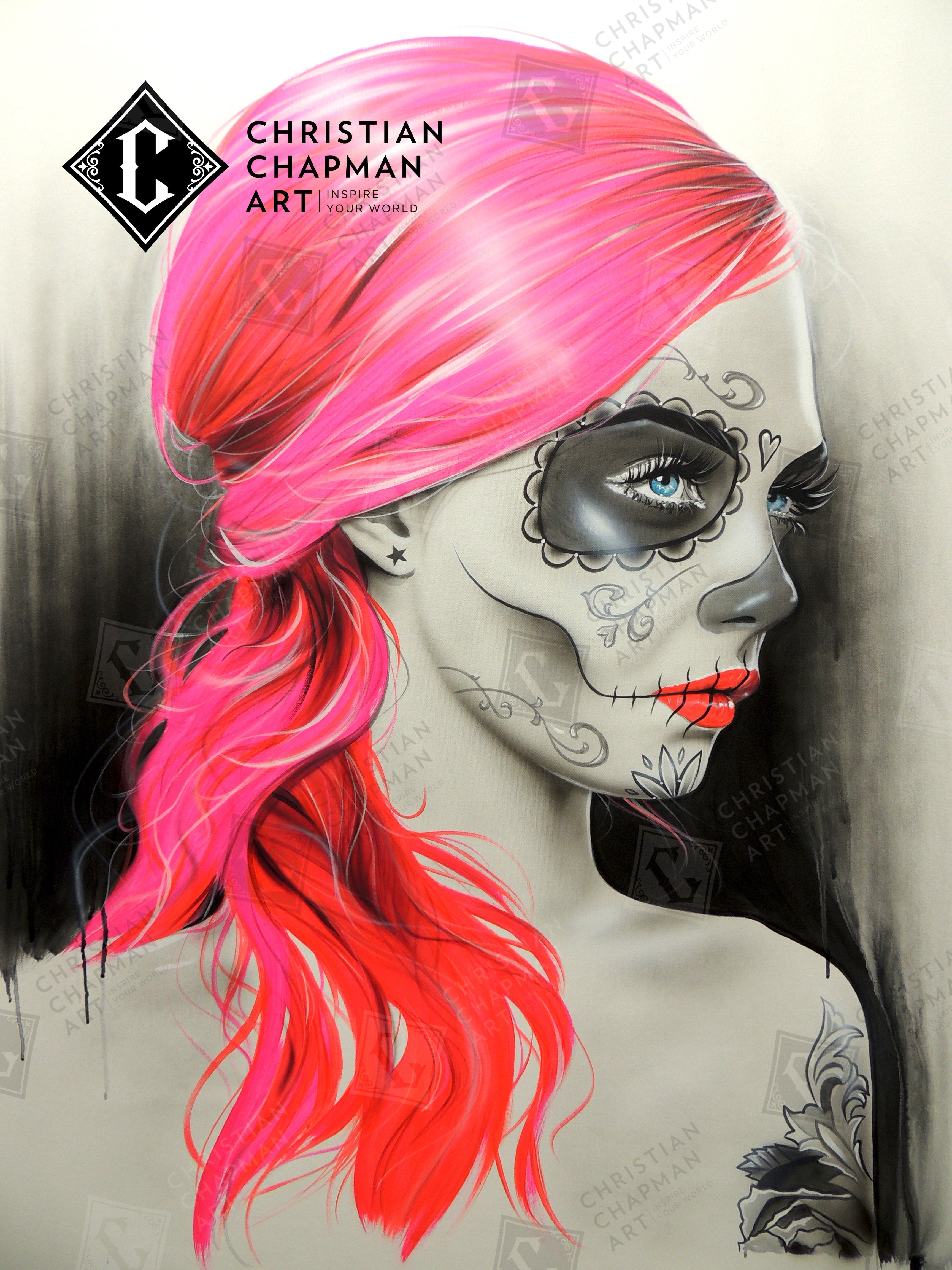
Tattoo Portrait Art That Holds a Real Presence
View our stunning tattoo artwork HERE.
Enquire on a custom tattoo artwork HERE.
A great tattoo doesn’t just decorate skin - it carries history, loyalty, grief, identity and obsession in a way almost no other image can. That is exactly why tattoo portrait art has such a powerful place on the wall. When it’s done well, it takes the emotional charge of tattoo culture and pairs it with the permanence, scale and visual authority of fine art.
This style speaks to people who want more than a pleasant picture. They want a face, a symbol, a stare, a presence. They want artwork that feels lived-in and deeply personal, whether it honours someone they love, captures a musician who shaped their life, or reflects the bold visual language they’ve built into their own identity.
What makes tattoo portrait art so compelling
Tattoo-inspired portraiture has a different energy from a standard realism piece. It often blends a highly recognisable face with strong graphic elements - inked motifs, sacred imagery, roses, script, skulls, religious references, animals or ornamental pattern. The result can feel cinematic, but it still needs to remain believable.
That balance is where the difference lies. If the portrait loses likeness, the whole work weakens. If the tattoo influence is too restrained, it can feel generic. The strongest pieces hold both. They preserve the subject’s true appearance while bringing in the attitude, symbolism and emotional weight associated with tattoo culture.
For collectors and commission clients, that matters because this kind of artwork rarely feels anonymous. It tends to reveal something sharper about the person who lives with it. A family portrait may celebrate connection. A pet portrait may preserve love. Tattoo portrait work often goes one step further - it declares allegiance, memory, strength or personal mythology.
Realism matters more than style trends
In portrait-based work, realism is not simply a technical flex. It is what allows the emotional impact to land. You can surround a face with dramatic imagery, rich contrast and meaningful symbolism, but if the eyes are off or the structure of the face feels vague, the piece stops feeling intimate and starts feeling decorative.
That is why serious tattoo portrait art relies on discipline. Skin tone, bone structure, expression, texture and light all need to be handled with confidence. Even when a work leans bold or stylised, the viewer should still feel the subject immediately. It should feel like them, not a loose interpretation of them.
This is especially important in memorial pieces or portraits of cultural icons. With a memorial, the artwork is carrying grief, remembrance and love. With a public figure, there is already a strong shared image in people’s minds. In both cases, accuracy is not optional. It is the foundation of trust.
Why this style works so well in modern interiors
There is a reason tattoo-influenced portraiture has moved beyond niche collections and into considered interiors. It has presence. Not the kind that fades into the room, but the kind that anchors it.
A strong portrait with tattoo elements can transform a space because it combines detail with edge. It brings the polish of fine art, but it also carries a rawness and individuality that mass-produced wall décor simply cannot fake. In a living room, studio, hallway or music room, it becomes a focal point almost instantly.
It also works across more interiors than people expect. In darker, moodier spaces, it can intensify atmosphere. In clean, minimal homes, it can become the statement piece that gives the room its pulse. The trick is not whether the work is bold. It is whether it is resolved. When the composition is refined and the portrait is executed with authority, the piece feels premium rather than chaotic.
Tattoo portrait art and the power of symbolism
One of the strongest reasons people commission this style is that it can say more than a standard portrait alone. A face tells one story. A face layered with carefully chosen symbols tells a deeper one.
A rose might speak to devotion or loss. Script can mark a date, lyric or vow. Religious iconography can convey faith, protection or redemption. Traditional tattoo motifs can signal endurance, rebellion, memory or belonging. None of these details should be added just because they look impressive. They need to belong to the subject.
That is where thoughtful portrait planning becomes essential. The best pieces are not built from random references. They are shaped around emotional truth. If the portrait is of a loved one, every added element should enrich that relationship. If it is of a musician, actor or athlete, the symbolism should connect with what they represent to the collector, not merely what appears in popular imagery.
When that level of intention is there, the artwork feels complete. Not crowded. Not forced. Complete.
Choosing the right subject for a tattoo-inspired portrait
Not every portrait needs tattoo treatment, and that’s worth saying plainly. Some subjects call for softness and restraint. Others come alive through contrast, iconography and a stronger edge. It depends on what you want the artwork to carry.
This style suits musician portraiture particularly well because music fandom is already bound up with identity, nostalgia and image. It also suits memorial work when the symbolism is deeply personal rather than theatrical. Celebrity portraiture, pet portraiture with decorative motifs, and family pieces with a bolder visual language can all work beautifully too.
The key question is simple: what should the portrait feel like when someone walks into the room? If the answer is powerful, iconic, emotional or unforgettable, tattoo-inspired treatment may be exactly right. If the answer is gentle, understated or purely documentary, another portrait direction may serve the subject better.
That kind of honesty matters because premium art should fit the emotional purpose, not just the trend.
Colour, black and grey, and the mood of the piece
A major decision in tattoo portrait art is palette. Black and grey can create extraordinary drama. It draws attention to facial structure, expression and contrast, and often feels timeless. It also mirrors classic tattoo aesthetics in a way that many collectors naturally connect with.
Colour introduces a different kind of impact. Rich reds, golds, teals or deep blues can heighten symbolic elements and make the piece feel more opulent or theatrical. Colour can also help tie the artwork into the interior where it will be displayed.
Neither approach is automatically better. Black and grey often feels more severe, iconic and reverent. Colour can feel more vivid, expressive and immersive. The right choice depends on the subject, the room and the emotional register you want the work to hold day after day.
The difference between impressive and unforgettable
Plenty of portrait art is technically skilled. Far less of it stays with you. The work that lingers usually has three things at once: likeness, atmosphere and intent.
Likeness is what draws you in first. Atmosphere is what gives the piece tension, mood and visual gravity. Intent is what makes it personal. Without that final layer, even a strong portrait can feel like a competent exercise. With it, the artwork becomes part of someone’s life story.
That is why clients are often drawn to artists who can handle realism with conviction while still understanding emotional narrative. An artist working in this space is not just replicating a photo. They are deciding what matters most in the face, what symbols deserve space, how bold the composition should be, and how to make the entire piece feel elevated rather than overstated.
For anyone seeking a statement work that captures both identity and intensity, that combination is what separates a piece you admire from one you genuinely treasure. It’s also why collectors looking for realism with emotional force often respond so strongly to portrait artists such as Christian Chapman Art, where likeness and visual impact are treated as inseparable.
Commissioning with confidence
If you are considering a custom piece, the strongest starting point is clarity. Know who the portrait is for, why you want it, and what emotional note it should strike. From there, reference quality matters enormously. So does communication about symbolism, scale and where the work will live.
Bigger is not always better, but this style does benefit from enough space for detail to breathe. A small canvas can hold impact, though highly layered concepts often need more room to feel resolved. The same applies to symbolism - one or two meaningful elements can be more powerful than a crowded composition trying to say everything at once.
A serious commission should feel considered from the beginning. You are not buying filler for an empty wall. You are investing in a piece that carries memory, taste and identity in full view.
Tattoo portrait art endures because it refuses to be forgettable. At its best, it turns personal history into something visually commanding - a work that doesn’t just match a room, but gives it soul.