

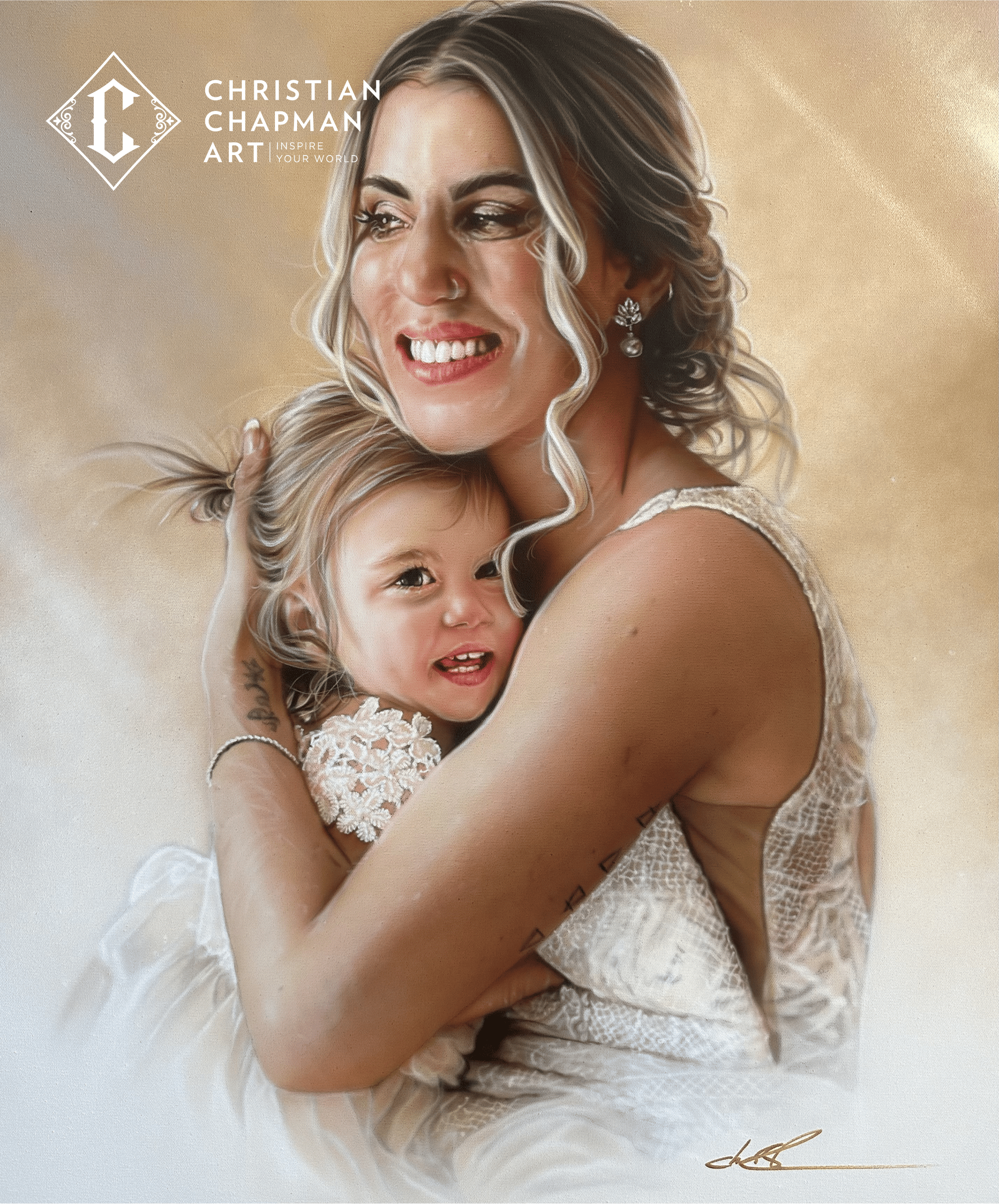
How a Realistic Portrait From Photo Feels Alive
View and enquire about our stunning original portrait paintings HERE.
Some photos hold more than a face. They hold a person’s energy, the look in their eyes, the memory tied to a particular day, and the feeling you do not want to lose. A realistic portrait from photo works at its best when it preserves all of that, not just the outline of someone’s features.
That is the difference between a picture copied onto canvas and a portrait that genuinely feels alive on the wall. Realism is not only about getting the nose, mouth and eyes in the right place. True portraiture is about presence. It is about capturing the exact character that makes a child look like that child, a beloved pet feel instantly familiar, or a music icon carry the same intensity they bring to the stage.
What makes a realistic portrait from photo believable?
Likeness is the first test. If the subject is not immediately recognisable, the portrait has missed its mark. But striking realism goes further than resemblance alone. It depends on subtle relationships between skin tone, light, expression, edge detail and proportion. A portrait can be technically skilled and still feel flat if those relationships are handled without sensitivity.
The strongest artists know that cameras distort as much as they record. A mobile photo might flatten the face, overexpose the forehead, darken one side too heavily or create odd colour casts. If an artist copies every flaw exactly as the camera recorded it, the result may be accurate to the photo but not truthful to the person. That is where experience matters.
A compelling portrait artist interprets the image with discipline. They keep the individual character of the subject intact while correcting what the lens got wrong. This is especially important in commission work, where the goal is not just realism for realism’s sake, but emotional recognition. When someone sees the finished piece and says, that is them, that is the standard that matters.
Why the source photo matters so much
If you want a realistic portrait from a photo, the quality of the reference image shapes everything that follows. Great portrait artists can work from a range of images, but some photos give them far more to work with than others.
Clear lighting is usually more important than ultra-high resolution. Soft natural light reveals form across the face without harsh shadows cutting through important details. Eye clarity matters too. In realistic portraiture, the eyes often carry the emotional centre of the piece, so if they are blurred, tiny or hidden in darkness, the portrait loses power before it begins.
Expression also matters. A forced smile can look stiff in paint, while a candid expression often has more life. For memorial portraits or family commissions, this becomes especially personal. Clients are not usually looking for a generic polished version of their loved one. They want the expression that feels familiar - the one that brings them back.
That said, perfection in the original photo is not always necessary. Sometimes the most meaningful image is old, grainy or imperfect. An experienced artist can still create something extraordinary from it, but expectations need to be realistic. Fine details may need to be reconstructed, and the final result may rely more heavily on artistic judgement than straightforward replication.
Realism is emotional, not mechanical
There is a common mistake people make when they think about realistic art. They assume realism is purely technical, as if the artist’s role is to reproduce information with machine-like precision. In practice, the most memorable portraiture is deeply emotional.
A realistic portrait should create an immediate reaction. It should stop you for a second. It should carry weight. In a family home, that might mean tenderness. In a pet portrait, it might be warmth and loyalty. In a portrait of a musician, athlete or cultural icon, it might be presence, power and intensity.
This emotional charge often comes from restraint. Not every inch of the painting needs to be rendered with identical sharpness. The face may carry the highest level of detail while hair, clothing or background are handled with more atmosphere. That contrast draws the eye to what matters most. It gives the subject authority.
Premium portrait artists understand this balance instinctively. They do not smother the work in detail just to prove skill. They use detail with purpose, so the portrait feels refined rather than overworked.
Choosing the right style for your space
A realistic portrait from photo is a personal purchase, but it is also a design decision. The artwork has to live somewhere. It needs to feel powerful up close and convincing across a room.
Scale changes the impact completely. A smaller portrait can feel intimate and precious, ideal for a bedside table, hallway nook or personal study. A larger piece becomes a statement wall artwork - the kind that anchors a room and changes the atmosphere around it. If the portrait is meant to honour someone significant, larger scale often gives the subject the presence they deserve.
Background treatment matters as well. A highly detailed background can work if the setting is central to the story, but many of the strongest portraits use simplified or moody backgrounds that keep the focus on the subject. This tends to suit modern interiors, collector homes and display spaces where the artwork itself should command attention.
Colour is another decision with emotional weight. Full colour can feel vivid and immediate. A monochrome or limited palette approach can feel timeless and dramatic. There is no universal right option - it depends on the subject, the room, and the feeling you want the piece to carry.
When realism matters most
There are some artworks where a loose interpretation works beautifully. Portrait commissions are often not one of them. If the piece is tied to memory, identity or tribute, realism becomes essential because the emotional bond is so specific.
This is why custom portraiture is such a powerful gift. For anniversaries, birthdays, memorials and milestone occasions, people are not just buying decor. They are commissioning recognition. They are saying this person mattered, this pet mattered, this moment deserves permanence.
The same is true for fandom and collector pieces. A portrait of a legendary musician or actor has to carry their unmistakable look. Otherwise, it loses the intensity that made them iconic in the first place. Realism gives that subject authority. It turns admiration into something tangible.
For homes, this kind of artwork does something mass-produced wall art simply cannot. It creates identity in a room. It tells a story no one else can buy off a shelf. That exclusivity is part of the appeal, but so is the emotional truth behind it.
What to look for before commissioning a realistic portrait from photo
Before commissioning a piece, spend time looking at the artist’s actual portrait work across different subjects. Some artists paint people beautifully but struggle with pets. Some excel at celebrity portraiture but not softer family scenes. Versatility matters if you want confidence in the final result.
Pay attention to eyes, skin tones and expression. These areas reveal whether the artist can capture real life rather than a polished approximation. If every subject in their portfolio has the same expression or finish, that can be a sign the work is formulaic.
It is also worth considering whether you want strict photo replication or artistic enhancement. Those are not the same thing. Strict replication may appeal if the source image is already exceptional. Artistic enhancement is often the better choice when the goal is a stronger, more finished piece than the original photo could ever provide.
For many clients, the sweet spot is realism with artistic authority - a portrait that stays faithful to the person while elevating the image into fine art. That is where a piece becomes more than a keepsake. It becomes something worthy of display.
Christian Chapman Art sits naturally in that premium space, where stunning accuracy and emotional impact are expected to exist together, not as a compromise but as the point of the work.
The portrait should outlast the photo
Mobile galleries are crowded. Images get buried, forgotten, upgraded out of old devices, or glanced at for a second before disappearing again. A painted portrait asks more of a moment. It gives it permanence. It gives it scale, texture and significance.
That is why the best realistic portraiture still matters in a world full of instant images. A photo captures a second. A portrait honours it. When it is done properly, you do not just see the subject - you feel their presence every time you walk past.
If you are choosing a portrait for your home, your family or someone you never want to stop remembering, the real question is not whether the artist can copy a photo. It is whether they can turn that photo into something that still feels alive years from now.