

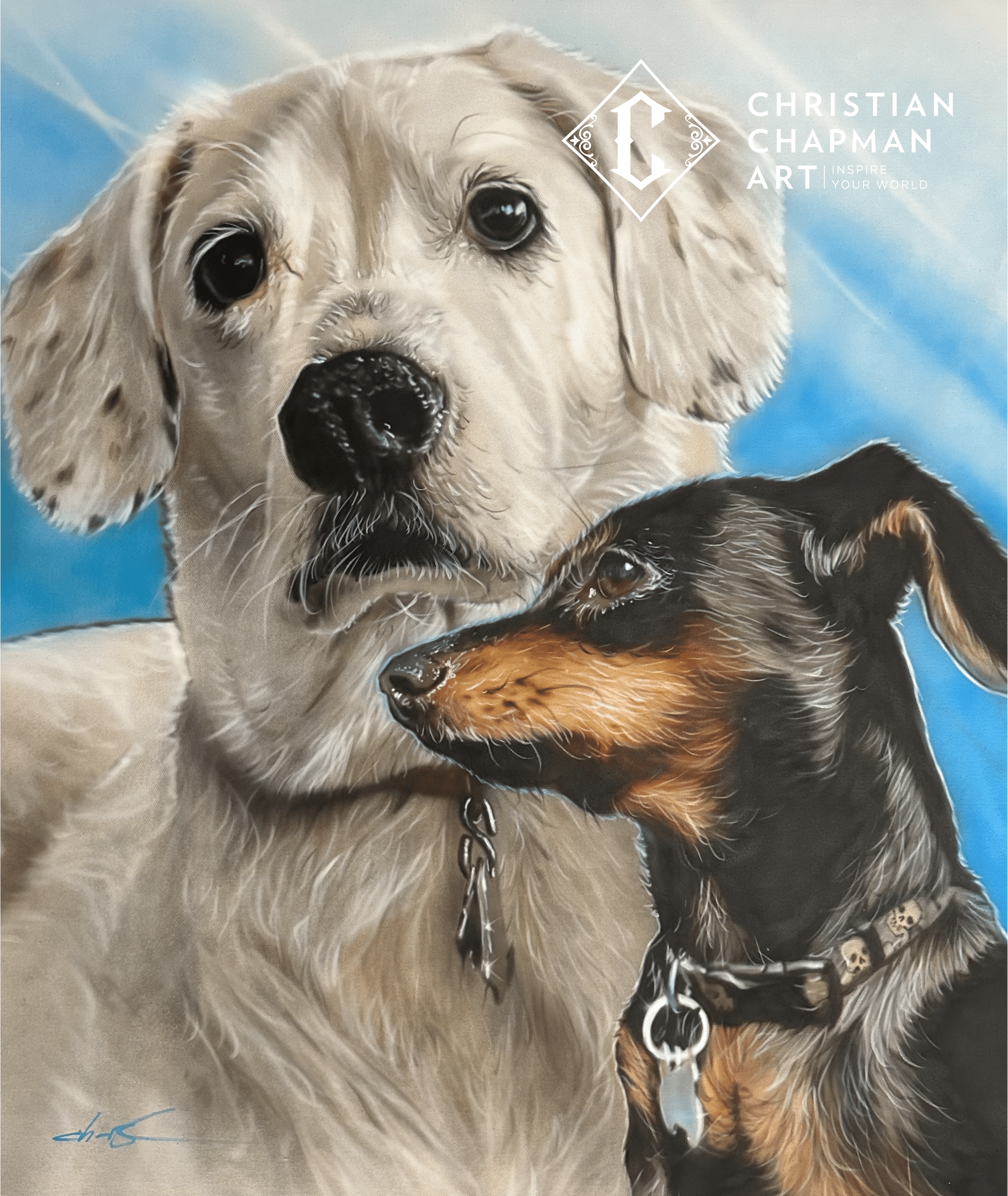
A Guide to Realistic Pet Portraits
You can view our breathtaking original pet portraits HERE.
Some pets fill a room with noise. Others barely make a sound, yet somehow become the emotional centre of a home. That is exactly why a guide to realistic pet portraits matters. When a portrait is done well, it does more than show fur, eyes and markings - it preserves presence. You are not simply commissioning an image of your dog, cat or horse. You are capturing character, memory and the small details your family would recognise instantly.
What makes realistic pet portraits feel truly lifelike
Realism is often misunderstood as pure technical skill. Skill matters, of course, but a convincing pet portrait depends on more than accurate anatomy or carefully painted whiskers. The strongest works combine precision with judgement. They know when to sharpen detail, when to soften it, and which features carry the animal’s personality most powerfully.
For one pet, that might be the alert tilt of the ears. For another, it could be a heavy-lidded gaze, a lopsided grin or the way light catches a black coat without flattening it. A realistic portrait succeeds when someone who loves that animal says, “That is them,” almost immediately. That response comes from likeness, not just finish.
There is also a difference between realism and overworking. Hyper-detailed fur in every square centimetre can sometimes make a portrait feel stiff. The best artists understand restraint. They create depth, texture and expression without losing the emotional force of the subject.
A practical guide to realistic pet portraits starts with the reference photo
The reference photo will shape nearly everything - pose, expression, detail level and the final emotional impact. If the photo is poor, the portrait is already working uphill. That does not mean every reference must look professionally staged, but it does need clarity, good lighting and a strong sense of the animal.
Natural light is usually best. Photos taken near a window or outdoors in even daylight tend to reveal coat colour and eye detail far better than harsh flash. Flash can flatten features, distort colour and create bright hotspots on noses or glossy fur. If your pet is dark-coated, this matters even more, because deep browns and blacks can lose all dimension in weak or artificial light.
Angle also matters. A photo taken at the pet’s eye level usually feels more intimate and true than one shot from above. Looking down on a dog can make the head seem larger and the body shorter. That may be cute for a quick mobile snap, but it is not always ideal for a refined portrait intended to live on your wall.
Expression is the final piece. Some pets look noble and calm when still. Others are only recognisable when they appear slightly mischievous. Choose a reference that feels emotionally right, not just technically sharp. If you are commissioning a memorial portrait, this becomes especially important. The goal is not a generic flattering image. It is the version of them your heart remembers.
Choosing the right composition for your space
A realistic pet portrait should suit both the subject and the room where it will hang. This is where many buyers think only about the animal and forget the artwork’s role as a statement piece. Scale, crop and background treatment all affect how the portrait lives in the home.
A close-up composition often has the strongest emotional pull. It brings attention to the eyes and creates immediate presence, which works beautifully in living areas, entryways and bedrooms. A wider composition can be more suitable if your pet’s posture tells part of the story - a seated pose, a proud stance or a familiar stretch across the floor.
Background choice is equally important. A simple, unobtrusive background usually keeps the focus on likeness and expression. More detailed surroundings can work, but only when they add meaning rather than clutter. A beach setting for a dog who lived for the water can be powerful. A heavily detailed garden behind a short-haired cat may simply compete for attention.
Size should never be an afterthought. A small piece can feel intimate on a gallery wall or side table, but if you want drama, larger formats deliver it. A commanding portrait can transform a room and give a beloved pet the visual importance they already hold in your life.
Colour, coat texture and the challenge of accuracy
Pet portraiture asks for extraordinary control of colour. White fur is never just white. Black coats are never simply black. Golden fur can shift from warm honey to pale cream depending on the light. One of the clearest signs of a serious realist is their ability to see these subtle changes and build them into the work.
Texture creates another challenge. Soft long fur, wiry coats, sleek short hair and feathered ears all require different handling. The same goes for skin around the muzzle, moisture on the nose and the glassy reflective quality of eyes. These details are not decorative extras. They are essential to believability.
That said, perfect accuracy is not always the same as the best artistic decision. Sometimes a reference photo may push colours too cool or too warm. Sometimes shadows are so heavy they obscure expression. A skilled artist interprets rather than copies blindly. That balance between faithful observation and artistic judgement is where premium portraiture separates itself from mass-produced pet art.
Guide to realistic pet portraits for gifts and memorial pieces
When a portrait is intended as a gift or memorial, the emotional stakes are higher. The artwork is no longer just decorative. It becomes part of someone’s personal history. That means every decision deserves more care, from the reference image to the portrait’s tone.
For gifts, think about what the recipient loves most about the pet. Is it their gentle expression, comic energy or regal presence? A technically strong portrait that misses the emotional truth can still feel oddly distant. If the pet was the household clown, a stiff formal pose may not land the way you hope.
For memorial portraits, sensitivity matters just as much as realism. Some people want quiet elegance and simplicity. Others want a more striking, celebratory piece that honours the animal’s presence in a bold way. Neither approach is more correct. It depends on the person, the pet and how they want to remember them.
This is where working with an artist who understands both likeness and emotional weight makes a real difference. Christian Chapman Art approaches portraiture with that dual focus - stunning accuracy paired with the kind of presence that gives a piece lasting meaning in the home.
What to discuss before commissioning a portrait
A commission tends to run more smoothly when expectations are clear from the start. Medium, size, deadline and framing preferences are practical details, but they all affect the final outcome. If the artwork is for a birthday, anniversary or Christmas gift, timing should be settled early. Fine art takes time, and rushed realism rarely looks premium.
You should also discuss any specific features that must be preserved. Perhaps your dog has a slightly torn ear, a distinctive white chest marking or one eye that catches the light differently. These are not flaws to smooth out. They are identity.
It is worth mentioning where the piece will hang as well. A portrait destined for a modern neutral interior may benefit from a different treatment than one intended for a darker, more dramatic space. Realistic art does not exist in isolation. It interacts with furniture, lighting and wall colour, and those surroundings can either elevate or diminish the effect.
If multiple pets are included, composition becomes even more important. Combining animals from separate reference photos is possible, but it takes care to make scale, lighting and perspective feel natural. Done badly, it looks pieced together. Done properly, it feels effortless.
Why the cheapest option is rarely the best one
Pet portraits sit in an unusual category because they are both sentimental purchase and visual investment. That can tempt people to compare options by price alone. The issue is that cheap portrait work often relies on shortcuts - weak reference handling, generic backgrounds, flattened colour and surface-level detail mistaken for realism.
A strong portrait holds up over time. It still feels moving after the novelty wears off. It still looks impressive on the wall years later. It still captures your pet in a way photos on a mobile often cannot. That kind of work comes from experience, observational skill and a serious commitment to likeness.
There is always a budget conversation, and that is fair. Not every commission needs to be oversized or highly complex. But if your goal is a piece with emotional gravity and display value, quality matters. This is not throwaway décor. It is the artwork people notice, ask about and remember.
A realistic pet portrait should feel like presence made visible. When the artist gets it right, you do not just see your pet. You feel them in the room again, steady and familiar, exactly where they belong.