

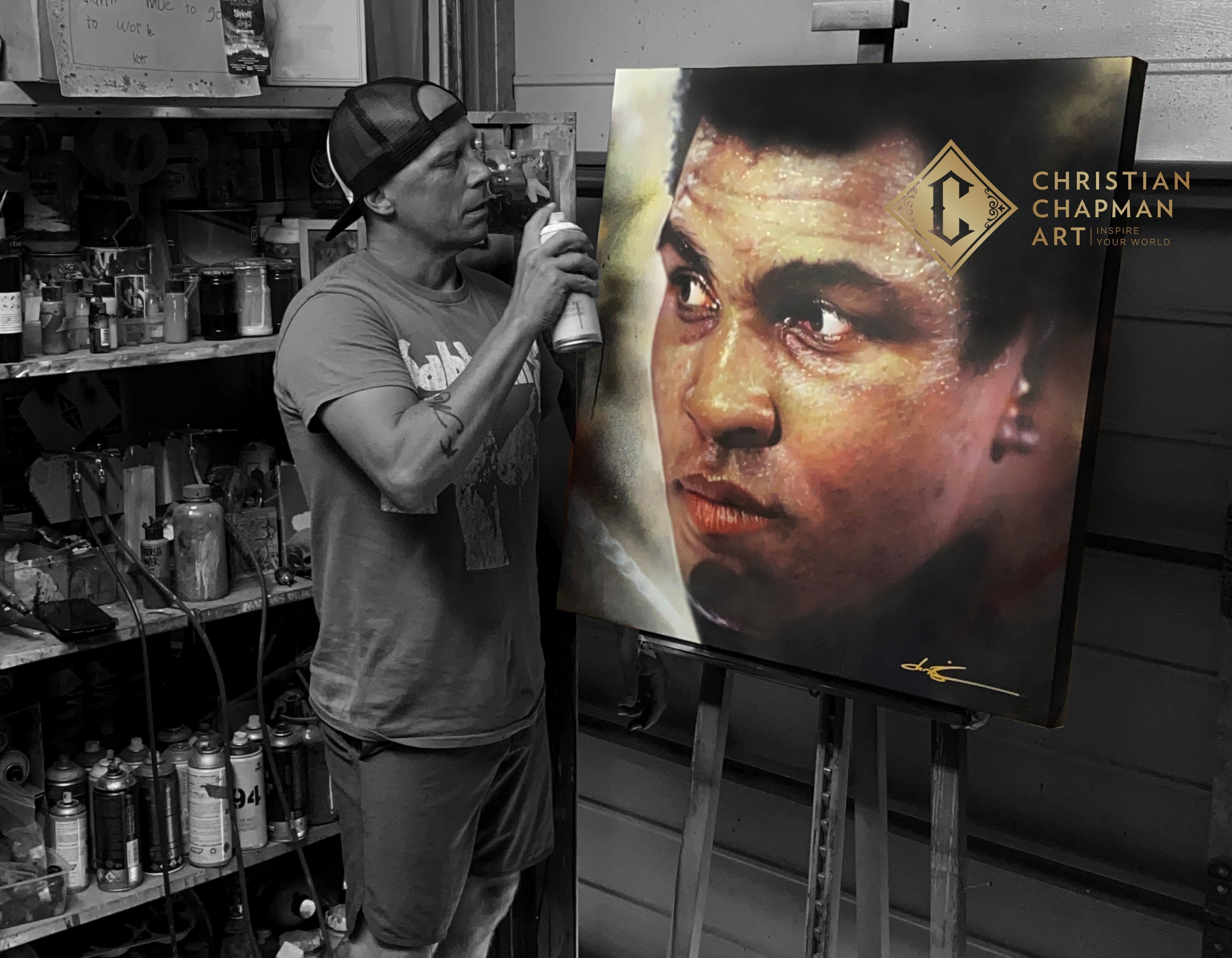
Why Sports Portrait Art Means More
Enquire about our Sports Portraits here.
A framed jersey can mark a memory. A ticket stub can hint at one. But sports portrait art does something neither of those ever can - it brings the feeling back into the room.
For the right collector, supporter or family, a portrait of an athlete is not just about the game. It is about identity, discipline, pride and the stories attached to every win, setback and comeback. Done properly, it becomes statement wall art with soul. It honours the subject, commands attention in a space and holds emotional weight long after the final siren.
What makes sports portrait art so powerful?
Sport creates some of the most emotionally charged images in modern life. There is intensity in a boxer before a bout, focus in a cricketer at the crease, exhaustion in a marathon runner and pure electricity in a footballer mid-celebration. Those moments already carry drama. Great portraiture takes that energy and gives it permanence.
That is what separates meaningful art from generic sports decor. Mass-produced prints tend to rely on noise - bright graphics, obvious logos, famous poses repeated thousands of times. Real portrait art works differently. It captures likeness with accuracy, but it also reveals something deeper in the expression, posture and atmosphere. You are not simply looking at an athlete. You are looking at presence.
For many buyers, that distinction matters. They do not want something that feels temporary or trendy. They want a piece that reflects devotion to a team, admiration for an individual or a personal connection to sport itself. That could be a childhood hero, a son who lives for the game, a partner who never missed a Saturday match or a loved one remembered through the sport that shaped their life.
Sports portrait art as personal wall art
The strongest pieces are rarely chosen at random. They come from attachment.
Sometimes that means commissioning a portrait of a sporting icon whose influence runs deep. A favourite player can represent a whole era of life - late nights watching finals, family rituals around big matches, years of admiration for skill and character. In that setting, the artwork becomes far more than fandom. It becomes part of the home’s emotional language.
Other times, the most powerful subject is someone closer to home. A junior athlete in their first season, a surf lifesaver, a retired player, a horse rider, a local legend - these portraits carry a kind of gravity that photographs do not always achieve on their own. A painting can heighten the importance of a moment without making it feel artificial. It gives memory a stronger visual presence.
That is why sports portrait art works so well as a gift too. It feels considered, elevated and deeply personal. It says that the subject’s passion deserves more than a standard snapshot on a phone screen or a generic poster ordered in five minutes.
The difference realism makes
In portraiture, likeness is everything. If the face is off, the emotional connection disappears. In sports portrait art, the challenge goes even further because the subject often has to look both recognisable and alive with intensity.
That takes technical control. Skin tones need depth. Eyes need focus. Movement has to feel believable even inside a still image. Details such as fabric texture, sweat, lighting and muscle tension all affect whether the portrait feels flat or compelling. The best work respects the humanity of the athlete as much as the spectacle of the sport.
Realism is especially important when the piece is intended as a premium display work. A dramatic portrait can dominate a room beautifully, but only if it earns that space. Precision gives it authority. Emotional truth gives it longevity.
There is a trade-off here, though. Hyper-detail without atmosphere can feel cold. On the other hand, expressive looseness may suit some contemporary interiors but can lose the exactness that collectors often want in a portrait commission. The sweet spot depends on the purpose of the piece. If the goal is legacy and presence, realism with mood usually has the strongest impact.
Choosing the right subject and reference
A strong portrait starts before a brush touches the surface. Subject choice matters, but reference quality matters just as much.
If you are commissioning a well-known athlete, think beyond the most overused press image. The best result often comes from a reference with character - a look of concentration, a quiet pre-game moment, a battered expression after effort, a triumphant but authentic celebration. A portrait gains strength when it captures a truth about the person, not merely their public image.
If the subject is a family member or someone from your own life, choose a photo that reflects both likeness and feeling. Crisp facial detail is essential, but so is posture and mood. Sometimes a direct gaze creates intimacy. Sometimes a side profile in kit, under stadium lights or against a dark background feels more cinematic. It depends on whether you want the artwork to feel personal, heroic or both.
Scale also changes everything. A smaller portrait can be intimate and refined, ideal for a study, hallway or bedroom. A larger work has more theatre. It suits a main living area, games room or entrance where the piece can set the tone immediately.
Where sports portrait art works best in a home
This kind of artwork deserves placement with intention. It is bold by nature, so the room should support that rather than compete with it.
In a living area, a powerful sports portrait can anchor the entire space. It introduces personality straight away and gives the room a clear focal point. In a home office, it can reflect discipline, drive and ambition without feeling corporate. In a dedicated media room or bar area, it brings energy and conversation value. For a teenager’s room or a training space, it can be both aspirational and deeply personal.
The interior style matters too. Dark, moody portraits often suit contemporary spaces with clean lines and restrained colour palettes. Brighter, high-contrast works can lift more eclectic or modern interiors. If the piece includes a recognisable team palette, that can either become a striking feature or a design challenge. The answer is balance. You want the artwork to stand out, but not clash with everything around it.
This is where custom work has a real advantage over off-the-shelf decor. The composition, palette and mood can be shaped to suit not just the subject, but the room it is going into.
Commissioned sports portrait art versus ready-made prints
There is room for both, depending on what you value.
A fine art print can be a smart choice if you already love a particular image and want a polished, more accessible way to display it. It still offers impact, especially when printed well and presented properly. For collectors building a gallery wall or buying for a gift with a shorter lead time, prints make sense.
A custom portrait sits in a different category. It is more personal, more distinctive and more emotionally loaded. It allows for control over the subject, composition, size and finish. It also carries the feeling of being made for a specific person and a specific space. That difference is visible.
For buyers who want something unforgettable rather than simply decorative, a commission will nearly always feel more significant. That is part of why serious portrait collectors return to artist-led work rather than settling for mass-produced imagery. The result has weight. It feels considered from the first glance.
Why this genre continues to grow
Sport has always inspired art, but the appetite for portrait-driven pieces is growing because people want more from what hangs on their walls. They want personality. They want memory. They want visual impact that still feels intimate.
Sports portrait art delivers that rare combination. It can celebrate elite talent, honour personal history and elevate an interior all at once. It speaks to loyalty without being tacky. It captures strength without losing emotion. And when executed with real skill, it does not just decorate a room - it changes the atmosphere of it.
That is why collectors, families and devoted supporters keep coming back to portraiture when the subject matters. A powerful sporting image already holds tension, pride and story. In the hands of an artist who understands realism and emotional presence, it becomes something lasting.
At Christian Chapman Art, that is exactly where portraiture earns its place - not as filler for a blank wall, but as a piece people feel every time they walk past it.
If there is a sporting moment, person or passion that still carries charge for you, that is usually the sign it deserves more than a screen or a shelf. It might be ready to become art.