

How to Make a Custom Family Portrait
View our beautiful family portraits HERE.
A great family portrait should do more than show who was in the room. It should hold presence. You should feel the relationship between the people in it, the energy of the home it belongs in, and the memory behind every face. If you are wondering how to make a custom family portrait, the real answer starts before the first sketch or photo edit. It starts with intention.
The strongest portraits are never random collections of faces. They are carefully built pieces of personal art. Whether you are creating one yourself, planning a commission, or gathering ideas before working with a professional artist, the difference is always in the choices you make early.
How to make a custom family portrait that feels personal
The first decision is not style. It is purpose. Ask yourself what this portrait needs to do. Is it meant to celebrate your immediate family in a formal way? Mark a milestone like a wedding, new baby, or anniversary? Honor a loved one who has passed? Include relatives who live in different places and were never photographed together? Those are very different portraits, and they should not be approached the same way.
When the purpose is clear, the rest becomes easier. A memorial portrait may call for a quieter emotional tone and a more reverent composition. A portrait for a main living space often needs stronger visual impact, clean structure, and enough scale to hold the wall. A gift for grandparents may lean warmer and more intimate, with familiar expressions carrying more weight than dramatic styling.
This is where many people go wrong. They start by choosing a trendy filter, an app, or a background without deciding what the artwork is supposed to preserve. A custom family portrait works best when it captures identity, not just appearance.
Start with the right photos
Even the most skilled artist can only push weak reference material so far. If you want a portrait with true likeness, choose photos that show each person clearly and honestly. Look for sharp eyes, natural skin tone, and an expression that feels like them on a normal good day, not a stiff camera smile that could belong to anyone.
If everyone has been photographed together in one strong image, that can be enough. But often the best custom portraits are built from multiple photos. One child looks perfect in one shot, another person has a better expression in a different image, and a pet only sat still once in a photo taken six months earlier. That is completely workable if the lighting and angles are reasonably consistent.
Try to avoid screenshots, heavily filtered social images, and photos taken from extreme angles. A portrait can be stylized, but the reference should still tell the truth. Good realism depends on structure - bone shape, eye spacing, the set of the mouth, the quiet details that make someone immediately recognizable.
If you are photographing specifically for a portrait, keep clothing simple, use natural light if possible, and avoid harsh shadows across the face. Neutral backgrounds help, but they are not essential if the subject is clear. What matters most is expression and clarity.
Choose a composition that tells the story
A custom portrait does not need to copy a single snapshot. In fact, it usually should not. This is your chance to create the version that feels complete.
Think about who needs to be included and how they relate to each other. A tightly grouped composition feels connected and intimate. More space between figures can create a formal, stately look. A close crop on faces gives emotional immediacy. A wider layout allows room for body language, pets, or meaningful objects.
There is also the question of realism versus idealization. Most people want to look like themselves, just at their best. That is not the same as being overly retouched. A strong family portrait respects age, personality, and individual character while still presenting everyone with care. The goal is dignity and beauty, not artificial perfection.
Background matters too. Some portraits need a clean studio-style backdrop so the faces dominate. Others benefit from a setting - a beach, a family home, a garden, a favorite chair, or a subtle interior that ties the piece to your life. If the room where the artwork will hang is already visually busy, a simpler background may create a stronger result.
Match the style to your home, not just your feed
One of the smartest ways to decide how to make a custom family portrait is to think about where it will live. Wall art is not only sentimental. It is part of the atmosphere of a space.
If the portrait is going above a fireplace, in an entryway, or over a bed, it needs enough visual authority to hold that position. Realistic painted portraits often work beautifully here because they carry weight and permanence. They feel intentional. They do not disappear into the room.
For a modern home, a crisp composition with controlled color and a clean background may feel right. For a warmer, layered interior, richer tones and more depth can add presence. Black and white can be striking, especially if you want timelessness over trend, but color often carries more emotional warmth for family work.
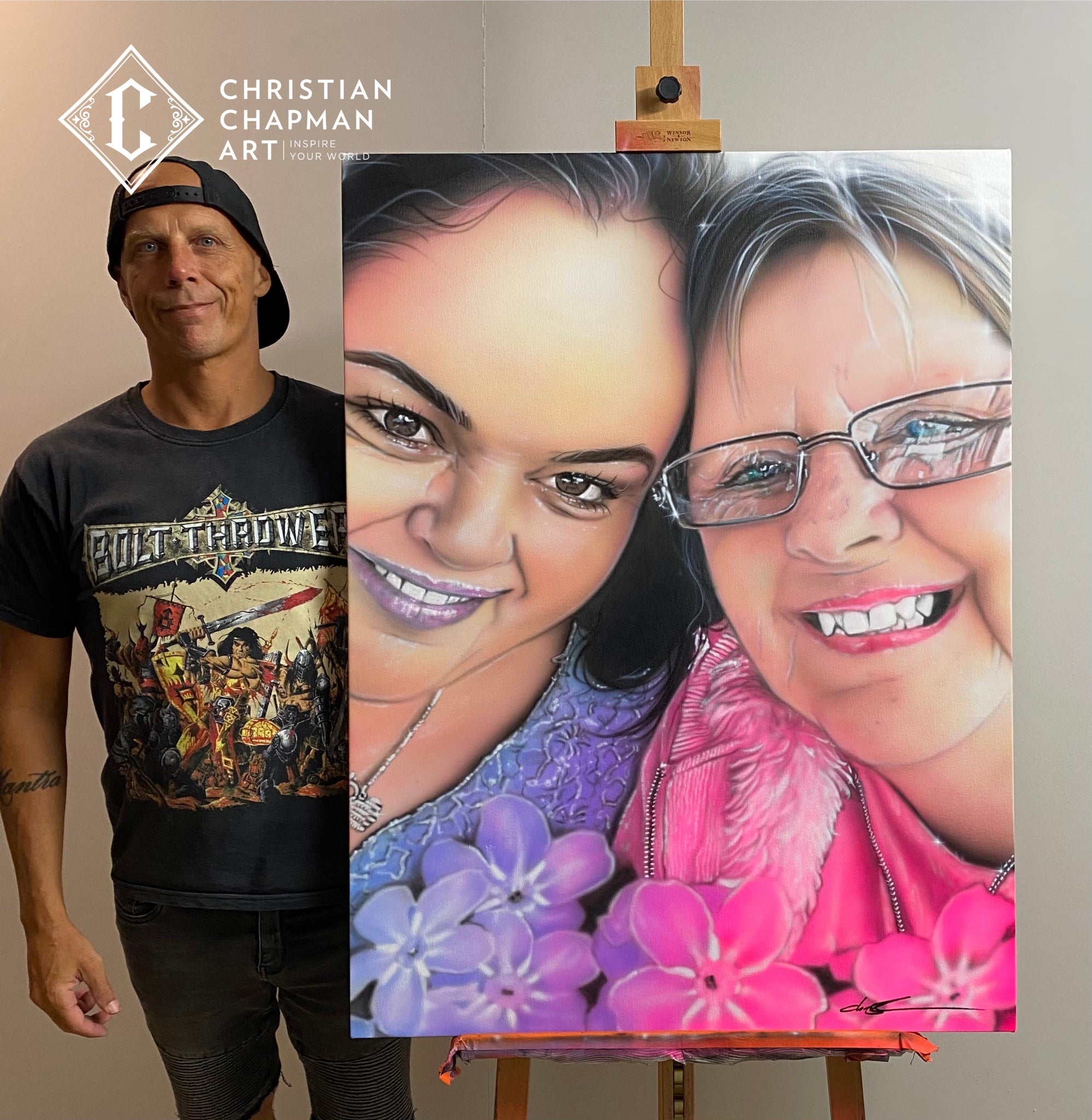
This is where a professional portrait artist brings real value. A piece should not only resemble your family. It should belong in your home. Christian Chapman Art, for example, builds portraits with both likeness and display impact in mind, which is exactly what separates meaningful art from generic personalized decor.
Decide what deserves emphasis
Not every portrait needs equal treatment across every detail. Sometimes the emotional center is a child. Sometimes it is the bond between siblings, the inclusion of a beloved dog, or the presence of a parent or grandparent whose role anchors the whole piece.
That does not mean making one person larger for no reason. It means understanding visual focus. The strongest portraits guide the eye. This can happen through placement, contrast, posture, or expression. If everything competes equally, the piece can feel flat.
You should also think about clothing and color harmony. Matching outfits can work, but they can also feel forced. Coordinated tones are usually better than identical looks. Soft neutrals, deep blues, earth tones, and classic black often reproduce well in fine art. Loud logos and distracting prints rarely do.
If you are commissioning the portrait, be specific
A premium custom portrait is collaborative. The more clearly you communicate, the better the result. Tell the artist who must be included, which photos show the best likeness, what emotional tone you want, where the piece will hang, and whether you prefer something formal, relaxed, dramatic, or understated.
This is also the time to discuss practical decisions like size, orientation, and medium. A vertical piece may suit a narrow wall, while a wide format can better accommodate a large family or multiple generations. Larger pieces create stronger impact, but only if the wall can support them. Small portraits can be beautiful, though they usually feel more intimate than commanding.
Be honest about preferences. If you want a polished realism rather than a loose painterly finish, say that. If you want a portrait assembled from several reference photos, confirm that up front. If there is a feature that absolutely must be right - a child’s expression, a pet’s markings, a father’s eyes - mention it early.
A serious artist will appreciate that clarity. Custom work is at its best when it balances artistic judgment with the client’s emotional priorities.
If you are making it yourself, keep it disciplined
If you are creating the portrait on your own, resist the urge to overcomplicate it. Start with your best reference images and make composition decisions before you begin rendering details. Rough placement first, then proportions, then values, then color. The order matters.
Many self-made portraits fail because the artist rushes toward eyelashes, hair texture, and clothing folds before the structure of the face is solid. Likeness comes from proportion and shape long before it comes from polish. If the eyes are too far apart or the mouth sits incorrectly, no amount of detail will save it.
Print your references if needed. Step back often. Flip the image horizontally to catch drawing errors. Work on the relationship between features instead of treating each one separately. And be selective with background and clothing detail so the faces remain the emotional center.
Expect a few trade-offs
There is no single perfect formula for how to make a custom family portrait because every decision changes something else. A highly detailed realism style often takes more time and investment, but it delivers presence and longevity. A simpler digital approach may be faster and more affordable, but it can lose depth. A portrait built from many photos offers flexibility, yet it requires stronger compositional skill to look natural.
The same is true emotionally. Some families want the portrait to feel polished and celebratory. Others want it to feel deeply personal, even a little raw. Neither is wrong. The right choice depends on what memory you want to live with on the wall.
The best custom family portrait is the one that still feels powerful years from now. Not because it followed a trend, but because it captured something real with care, confidence, and unmistakable human presence. If you begin there, every artistic choice has a stronger foundation.
When you get it right, a family portrait stops being just another picture. It becomes part of the home’s identity.