

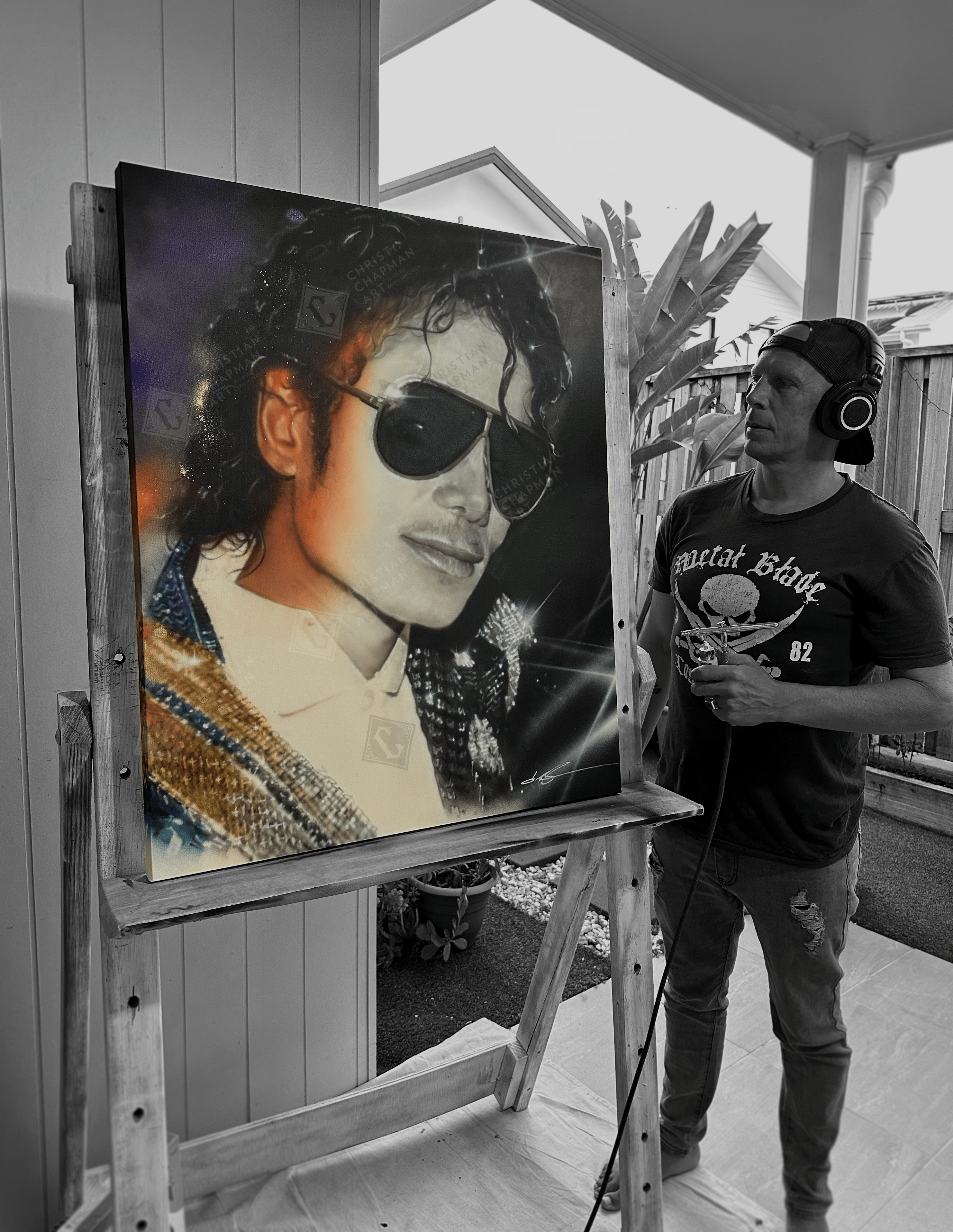
How to Commission a Portrait Artist
See more of our beautiful hand done portraits HERE.
A great portrait does more than resemble someone. It holds presence. Whether it is your child, your dog, a favourite musician or someone you miss deeply, the right commissioned piece should feel unmistakably alive the moment it goes on the wall. That is why knowing how to commission a portrait artist properly matters - not just for the final result, but for the entire experience.
How to commission a portrait artist without disappointment
The biggest mistake people make is treating a portrait commission like any other online purchase. It is not the same as ordering décor off a shelf. You are asking an artist to translate memory, personality and visual detail into something lasting. That takes more than a quick message and a blurry photo.
Start by being honest about what you want the artwork to do. Some portraits are intimate family keepsakes. Others are bold centrepieces designed to stop people in their tracks. Some need soft sentiment. Others need edge, drama and unmistakable attitude. If you are clear about the emotional brief from the start, you will choose a better artist and get a stronger result.
A realistic portrait specialist, for example, is ideal if likeness is non-negotiable. If you want every expression, feature and tiny detail captured with stunning accuracy, style matters just as much as skill. Not every talented painter is the right fit for every subject.
Choose the artist for style, not just availability
If you are working out how to commission a portrait artist, this is the point where quality reveals itself. Look closely at the artist's previous work and ask a simple question - do their portraits feel convincing, powerful and emotionally true?
Likeness is the baseline. Beyond that, you are looking for consistency. Can they paint children without making them look stiff? Do pet portraits still feel dignified rather than cartoonish? If they create celebrity or musician artwork, do those pieces carry the charisma of the subject, not just the features? Strong portrait artists do not merely copy photographs. They build impact.
This is also where taste comes in. A portrait may be technically excellent and still feel wrong for your home or your reason for commissioning it. If your space suits statement artwork, choose an artist whose work has presence. If the piece is a memorial, sensitivity and restraint may matter more than dramatic styling. The best match is not always the fastest, cheapest or most local option. It is the artist whose work already proves they understand the feeling you want.
Be clear about the subject and the story
Once you have chosen the artist, the next step is clarity. Tell them who the subject is and why this piece matters. That context shapes the artwork more than many clients realise.
A portrait for a birthday gift may need warmth and immediate recognisability. A tribute piece may call for a more reverent mood. A musician portrait might need intensity, stage energy or a specific era. A family portrait could be less about perfection and more about connection between people. Good artists can work from a brief, but great ones create more compelling work when they understand the story behind it.
You do not need to write an essay. A few direct sentences about the subject, the mood you want and where the artwork will be displayed can be enough. That information helps with composition, colour choices, scale and overall presence.
Your reference photos will make or break the result
This is where many commissions go off course. If the artist works from photos, the quality of those images matters enormously. Even the most skilled portrait artist cannot invent crisp detail from a dark, grainy image taken from ten metres away.
Choose photos that show the face clearly, with natural lighting and visible detail in the eyes. If the portrait includes more than the head and shoulders, make sure the body position and proportions are clear too. It is often helpful to send several images rather than one, especially if one captures the expression, another shows accurate colouring and a third gives better detail around features.
If the subject has passed away, or if you are working from older images, tell the artist that upfront. A strong portrait artist will let you know what is workable and where there may be limitations. It is better to have that conversation early than assume every imperfect photo can be transformed into a flawless portrait.
If there are details that must stay exactly as shown - a tattoo, a piece of jewellery, a hairstyle, a uniform, a guitar, a collar tag - mention them specifically. Portraiture is often about identity markers as much as facial likeness.
Agree on size, format and display impact
A commission should suit the space as well as the subject. Before the artwork begins, think about where it will live. Is it intended for a hallway, bedroom, living area, music room or office? Will it sit among other artworks or command a wall on its own?
A small portrait can be beautifully personal, but it will not create the same visual impact as a larger statement piece. On the other hand, going too large for a delicate or quietly emotional subject can feel overwhelming. There is no universal right size. It depends on the subject, the room and the role the artwork needs to play.
You should also ask whether the artist offers different formats or finishes. Some clients want a classic single-subject portrait. Others want a cropped close-up, a multi-subject composition or something with a stronger contemporary edge. If interior styling matters to you, choose with the final display in mind, not just the digital preview.
Understand pricing without reducing it to price alone
Portrait commissions vary widely in cost, and they should. Size, complexity, number of subjects, medium and artist reputation all influence the final price. A highly detailed realism piece with one subject is a different undertaking from a looser interpretive painting, and a two-person portrait with demanding reference work is different again.
The cheapest quote is rarely the safest choice if likeness and emotional impact matter. You are not just paying for hours worked. You are paying for judgement, technical control, artistic consistency and the ability to create something worth keeping for years.
That said, premium does not mean vague. A professional artist should be clear about what is included, what changes may cost extra and how payment works. Ask about deposits, staged payments, shipping and framing if relevant. A polished commission process often reflects a polished final result.
What a good commission process feels like
A strong commission process feels focused, collaborative and reassuring. You know what the artist needs from you. You understand what you are getting. You feel that your subject is being treated with care, not processed like another order number.
That matters whether you are commissioning a beloved pet, a family portrait or a dramatic artwork of an icon who shaped your life. The best portrait artists combine technical precision with respect for the subject. They know that realism is not only about matching a photograph. It is about capturing presence, spirit and visual authority.
For buyers who want that level of finish, realism-led artists such as Christian Chapman Art appeal because the work is designed to be both emotionally personal and visually unforgettable. That combination is rarer than it looks.
The final decision is emotional as much as practical
If you are still weighing up how to commission a portrait artist, listen to your reaction as much as your checklist. When you see the right artist's work, there is usually a moment of certainty. You stop wondering whether they can do it and start imagining the finished piece in your home.
That instinct matters. Portrait commissions are deeply personal purchases. They often mark love, grief, admiration, identity or memory. You are not buying filler for a blank wall. You are investing in a piece that should hold attention for years and still mean something every time you pass it.
Choose the artist whose work makes you feel something before your own portrait has even begun. That is often the clearest sign you are in the right hands.